Comparing Approaches to Legal AI: Standalone Tools vs. AI-Native Platforms

.jpg)
Whether you manage a high-volume personal injury practice, navigate complex insurance defense litigation, or oversee an in-house legal team, you’ve likely felt the shift. Legaltech is no longer just about storing files or recording time after the fact. Instead, it’s about proactive, AI-driven action.
Every software demo promises game-changing efficiency, but under the hood, not all legal AI is built the same. The real differentiator driving operational efficiency comes down to architecture: Standalone (bolt-on) AI tools versus embedded, AI-native platforms.
Understanding the core differences in AI architecture is the key to unlocking efficiency, protecting data, and avoiding bottlenecks. Here is how both AI approaches compare, including how an AI-native platform can help power law firms and legal departments alike.
Comparing standalone vs. AI-native solutions
To evaluate legal AI effectively, it helps to understand how each model operates across your daily workflow.
Standalone AI (The "bolt-on" approach)
Standalone tools operate as isolated software applications. They perform specific tasks, such as summarizing a PDF, parsing a medical chronology, or drafting an email, in a workflow outside your core case management system.
Here, you likely log in to a separate browser tab, export case files or documents from your primary system, upload them to the standalone tool, wait for processing, and then manually copy/paste or re-enter the output back into your core matter file.
Even when a standalone AI tool is accessed inside your core workflows, the “bolt-on” approach can still cause friction. The tool may not be fully bi-directional, meaning it can’t automatically update fields on the record or handle tasks autonomously. You may also need to manually trigger an action or wait for processing delays, which can slow you down.
The AI only knows what you explicitly feed it in that specific session. It has no visibility into historical case data, billing guidelines, or communication threads. This creates data friction, leads to context loss, introduces security risks, and delays overall case progression.
AI-native solutions (The platform approach)
AI-native platforms weave artificial intelligence directly into core workflows, where your team already manages cases, documents, and client relationships.
Intelligence operates continuously behind the scenes. When a new document, intake, or medical bill enters the system, the AI processes it immediately within the existing case file, without requiring manual exports or switching apps.
The AI possesses full context of the entire matter lifecycle, from initial intake scoring and historical settlement values to outside counsel guidelines and pending court deadlines. This enables real-time execution, eliminates app switching, and maintains a secure data environment.
Head-to-head comparison
_table%20(2).png)
How AI architecture impacts your practice area
Personal Injury
For high-volume personal injury firms, the goal is to increase client conversions, reduce time on desk, and maximize settlement value. When teams rely on standalone AI to build medical chronologies, paralegals are forced to manually export hundreds of pages, wait for processing, and re-enter key findings into the core system, creating friction and disconnecting critical insights from document drafting tools.
An AI-native platform eliminates these manual handoffs. The moment medical records enter the system, embedded AI automatically flags treatment gaps, updates the chronology directly in the case file, and reconciles bills with historical settlement data to instantly highlight high-value case markers.
Insurance Defense
Insurance defense teams need to reduce leakage and write-downs while maximizing profitability. When attorneys use standalone tools to draft responses or log time, the software lacks visibility into client-specific billing rules, frequently resulting in entries that are rejected during review, which can negatively impact firm revenue.
With an AI-native approach, passive time capture and compliance monitoring run quietly in the background of your existing workflows. As motions are drafted and documents reviewed, the platform automatically captures billable hours, formats entries to match exact guidelines, and flags billing risks before invoices are ever submitted.
Corporate Legal
Corporate legal departments are focused on managing spend, streamlining high-volume work, and optimizing outside counsel selection. Point solutions fall short here because they analyze performance or contracts in isolation. Without direct access to central eBilling and matter management data, AI’s recommendations rely on incomplete snapshots rather than a full picture of performance.
An AI-native platform brings connected intelligence to legal operations by evaluating outside counsel in real time. By dynamically cross-referencing incoming invoices against historical outcomes, cycle times, and spend stored across your entire database, in-house teams can make data-driven decisions that help them move the rest of the business forward.
Turn intelligence into action with Litify ACE
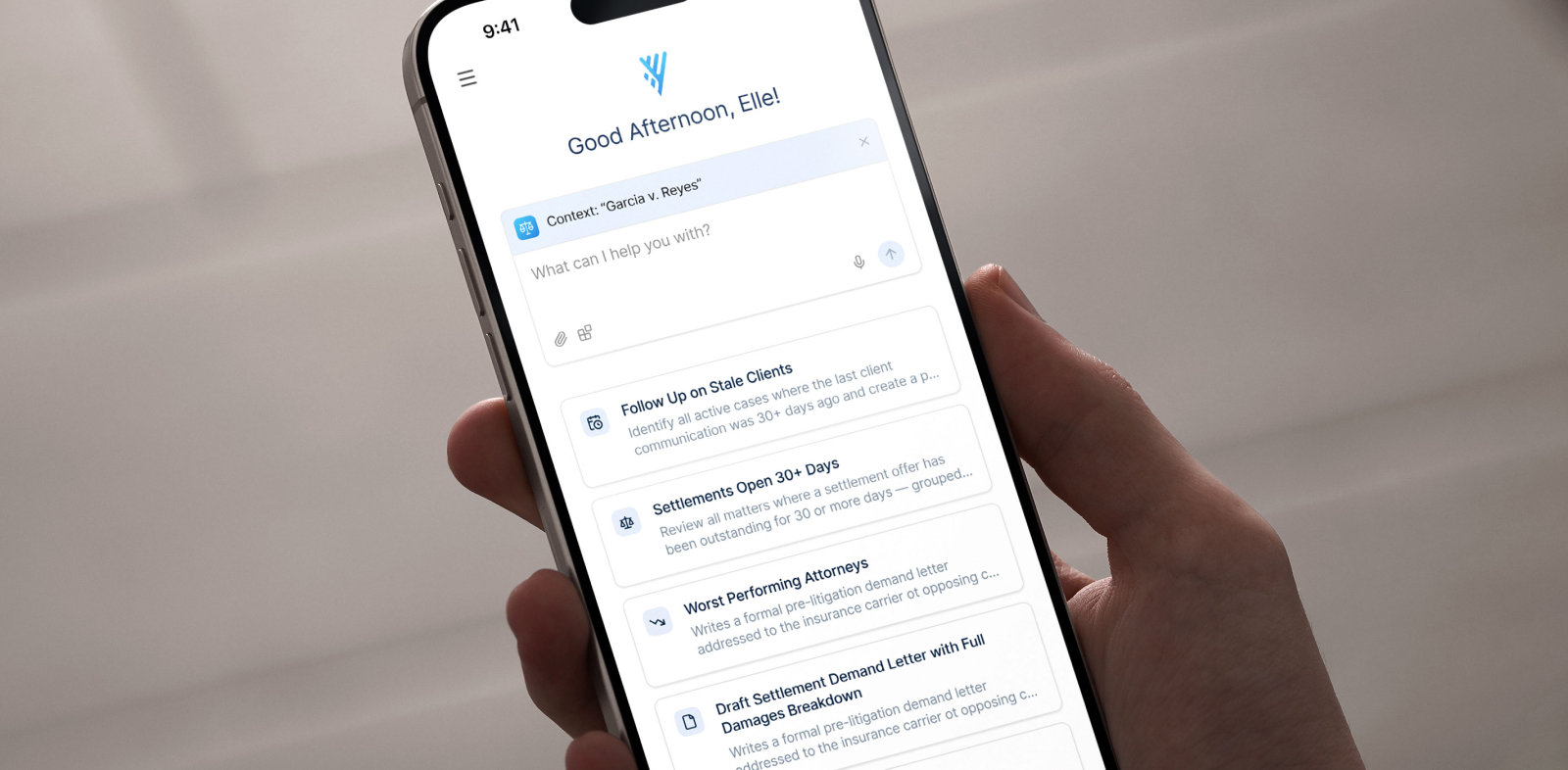
At Litify, we believe legal AI shouldn't just answer questions — it should take action. That is why we built the Litify Agentic Case Expert (ACE) to serve as your proactive, autonomous partner. Litify ACE handles the administrative heavy lifting in the background, freeing your team to focus on high-value case strategy, client relationships, and operational efficiency.
Even better, Litify ACE proactively recommends the next best action, so you know exactly where to focus your time. It anticipates what your team needs next, such as reviewing the matter summary, creating the demand packet, or identifying lost billable time. From there, Litify ACE can initiate the autonomous workflows across the entire matter lifecycle.
Choosing the right legal AI architecture is a strategic decision that shapes how your firm or legal department will scale for years to come. Armed with the right questions and evaluation frameworks, you can confidently move past the hype and invest in technology that drives real balance-sheet results.
Download the full Legal AI Buyer’s Guide for our complete evaluation checklist, demo questions, and 60-day implementation checklist.
Ready to see Litify ACE in action? Schedule a demo to learn how an AI-native platform can transform your organization.