How Automated Time Tracking for Insurance Defense Firms Creates Transparent, Client‑Centric Experiences

Automated time tracking helps insurance defense firms strengthen client relationships by improving billing clarity, reducing disputes, and capturing work more accurately. With features like intelligent time capture, real-time compliance checks, and mobile logging, firms can keep clients informed without individual follow-ups. Configurable workflows and built-in analytics support billing consistency across teams and matters. As expectations shift toward legal workflows that prioritize client experience, firms using Litify’s Salesforce-powered platform are equipped to deliver transparency today and continue evolving with the power of AI.
Insurance defense work demands trust. Carriers need to see exactly what was done, when it was done, and why. But when time entries lag behind or rely on memory, that visibility disappears, and billing becomes a negotiation.
Automated time tracking helps keep entries clear and organized. It logs work automatically in the background, so firms always have a clear record and clients always know where things stand.
That’s why more insurance defense firms are turning to Litify to bring consistency into billing from day one. The platform already supports real-time compliance checks, time capture, and billing automation, and we’re continuing to build on that foundation with AI-powered enhancements in development.
Why time tracking challenges hurt client experience in law firms
Legal billing is a reflection of how your firm works, so you want to make a good impression. However, firms that still rely on manual time tracking know how easily it interrupts focus and slows down the work that actually moves a case forward.
For clients, the results are just as frustrating. They have to deal with delayed invoices, unclear descriptions, inconsistent billing, and charges that feel disconnected from reality.
Firms risk losing revenue and credibility when time tracking isn’t built into their workflow. In a world where every line is audited, insurance defense firms can’t afford that kind of uncertainty.
Transparent billing builds stronger client relationships
Automated billing makes things easier for timekeepers, managing partners, and clients. When invoices clearly show time logs and match expectations, clients are more likely to approve them quickly and stay engaged in the long term.
Firms that use automated time-tracking paired with secure billing portals give clients increased visibility, reducing back-and-forth and helping retain business because it genuinely improves your clients’ experience.
Key features of automated time tracking software for law firms
For insurance defense firms, time tracking needs to be accurate and tailored to how legal work actually happens. It should keep attorneys focused and give clients the visibility they expect.
Not every firm works the same way, and your time tracking software shouldn’t either. Look for a platform that can adapt to your team, your clients, and the way your matters are structured. The following features are a good starting point:
Intelligent time capture and categorization
Attorneys lose time when they have to log every detail manually. Intelligent time tracking tools can help by identifying standard actions like reviewing documents, joining calls, or responding to emails, and then automatically and accurately linking them to the right matter.
Built-in compliance checks
When carriers reject invoices, it’s often because of missing billing codes or vague descriptions. Built-in compliance rules can help prevent that by flagging those issues before anything gets submitted.
The earlier errors are caught, the less time your team spends fixing them.
Configurable workflows and rate enforcement
The way you assign tasks and apply rates may change depending on the case or client.
With flexible tools, you can set billing rates, assign tasks, and enforce compliance in ways that match your firm's needs.
That level of control helps teams manage large caseloads without sacrificing speed or accuracy.
Synced time entry across devices
Time tracking should feel like a natural part of your day. Whether attorneys are logging time on a laptop, mobile phone, or from an Outlook add-in, entries should sync instantly and tie back to the right matter.
Support for batch entry, timers, and calendar views can also make it easier to keep time records clean and complete.
Reporting and analytics for billing performance
When time and billing data are connected, it’s easier to understand what’s working or what processes need improvement. Look for tools that surface trends by client, matter, and timekeeper so you can see where time is going.
Dashboards that track utilization, WIP, and profitability in one place can help your firm stay ahead of revenue risks.
How to start automated time tracking in your law firm
Getting started with automated time tracking is easier than you think. When tools are secure and built to fit your workflows, adoption happens faster. Litify leverages the power of the Salesforce platform, so it’s flexible enough to support your current processes and scale as you grow.
These steps walk through how to assess your setup and build a foundation that supports better billing and a better client experience:
1. Choose the right legal time tracking tools
Look for tools that automatically capture time, support mobile use, and integrate cleanly with your firm’s ebilling portal. The ideal time capture solutions help ensure compliance with billing rules and support billing codes. The platform should also include role-based permissions and scale as the firm grows.
2. Prepare your team
Start with a clear plan: audit your current system, clean up your data, and define how different roles should interact with the tool. Hold hands-on training and communicate early wins.
3. Customize time entries for client-focused reporting
When your time entries are organized in a way that reflects what clients care about, it’s easier to build trust with them. Add filters, categories, and stakeholder views to simplify reporting for everyone involved. You’ll also want to adjust permissions to give each role the right level of access without overexposing sensitive data.
4. Measure ROI and refine client experience metrics
Track how billing metrics shift over time. Are there fewer disputes? Faster approvals? Better feedback? These data points help you refine how your team works and how clients experience that work.
Small improvements in time tracking can yield huge gains for the firm, including tangible ROI, more consistent billing, and a better client experience. Investments in automated time tracking solutions often pay for themselves.
For example, if attorneys spend an hour on Saturday reconstructing their week because they need to manually enter time, that can add up to hundreds of dollars per attorney per month. With AI-driven time capture, the time is already in the system as the week progresses, so the attorney can dedicate hours previously spent on time entry to more strategic, billable work.
Elevate the client experience with Litify AI Time Capture
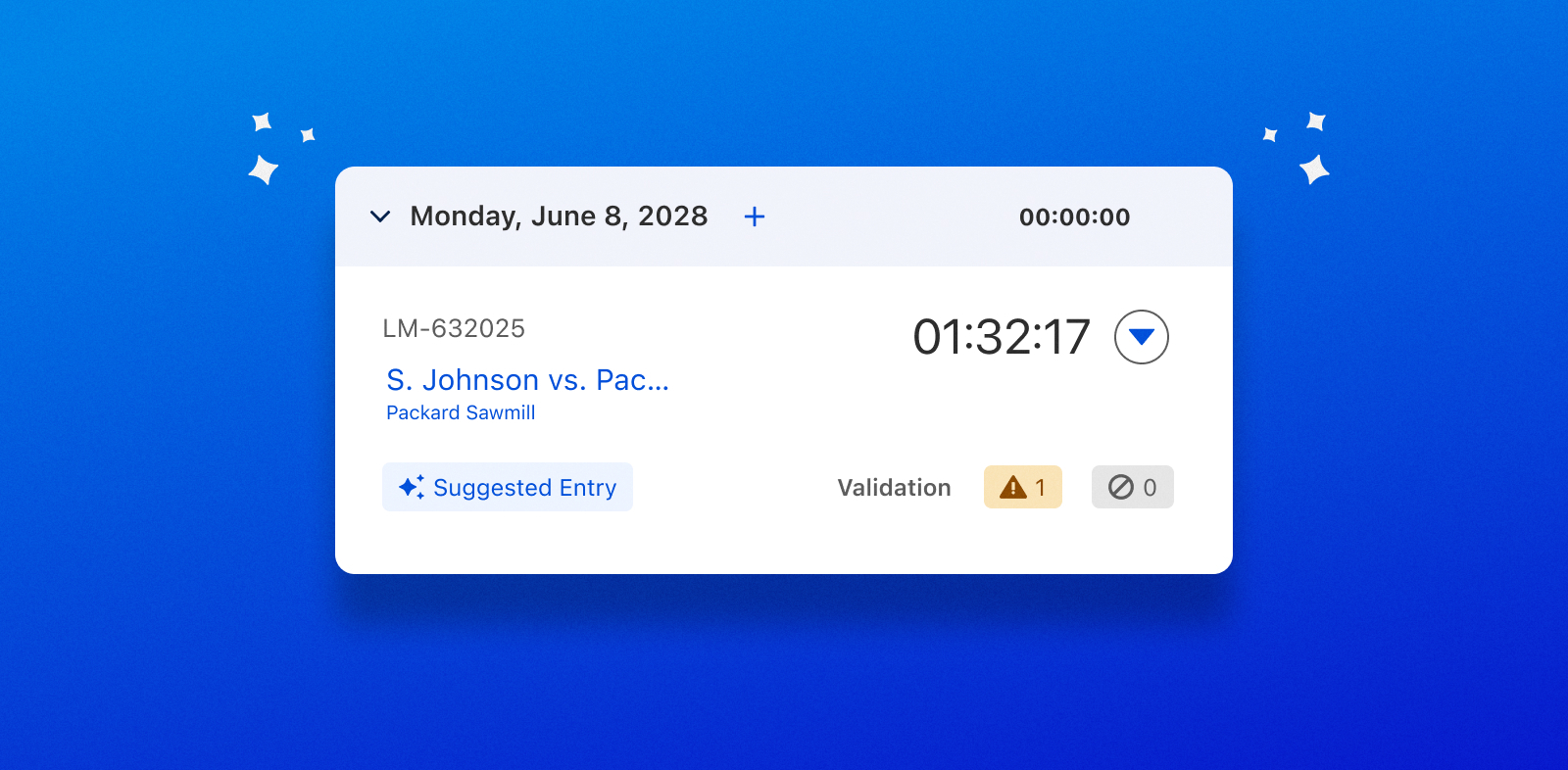
Through a strategic partnership with Billables AI, an AI-powered legal operations platform that eliminates manual time tracking for professional service providers, Litify AI Time Capture acts as your autonomous partner and identifies billable activity in real time and drafts time entries, so you can focus on substantive legal work.
Litify AI Time Capture continuously analyzes activity across the tools attorneys already use, including Microsoft 365, Zoom, Adobe, and more. It then generates detailed narratives aligned to client billing requirements, allowing attorneys to review and approve time within Litify without interrupting their workflow. The solution captures activity securely and passively, without requiring manual entry or invasive monitoring. By shifting timekeeping from a manual, after-the-fact task to an automated, continuous process, firms can capture more of the work they are already doing and reduce administrative strain.
Ultimately, better client relationships are formed when both parties can be confident in the work that is being done. Law firms deserve to be compensated for their time, and clients deserve to be treated fairly. Let Litify handle the rest.
Request a demo today to learn how Litify's AI-native platform of action can help your team recover missing revenue, reclaim attorney focus, and protect realization rates.
FAQs
How does automated time tracking improve client experience in law firms?
It reduces confusion and keeps billing aligned with expectations. When time is logged as the work happens, and clients can view updates as needed, it’s easier to avoid disputes and delays.
What can Litify track automatically today?
Litify supports automated time tracking for common tasks like document editing, calendar activity, and emails. Time entries can be reviewed and updated before submission, giving attorneys more accuracy with less manual work.
How secure is Litify’s billing and timekeeping data?
Litify leverages the power of the Salesforce platform and follows enterprise-grade data security practices. Time logs, billing data, and client communications are encrypted and access-controlled by role.
Does Litify support billing rules for insurance carriers?
Yes. Firms can configure time categories, billing codes, and approval workflows that align with client-specific rules. This helps support compliance in high-volume audit environments.
What metrics can we track to measure improvements?
Firms often track time-to-invoice, dispute rates, billed vs. tracked hours, and client satisfaction scores. Litify includes built-in dashboards to help visualize these metrics across teams, clients, or practice areas.