How Corporate Legal Teams are Approaching AI Adoption and Maturity


New data from Litify’s State of AI in Legal Report reveals that corporate legal departments are moving beyond simply experimenting with generative AI and prompts. They are integrating AI into their core workflows and legal operations to meet the increasing demands of the business.
The challenge for these corporate legal teams is bridging the gap between basic task automation and true AI maturity. In an era where doing more with less is the standard, the report's findings highlight how top-tier legal departments are using AI-native platforms to position themselves as strategic partners within the organization.
While our complete report covers the broad legal landscape, below we’ve isolated the data that matters most to in-house corporate legal teams.
Investing in a unified legal ecosystem
Tech spending is on the rise as legal teams look to modernize their infrastructure. 55% of in-house legal departments saw their technology budgets increase last year, with a clear focus on building a connected tech stack.
Investment priorities for corporate legal departments include:
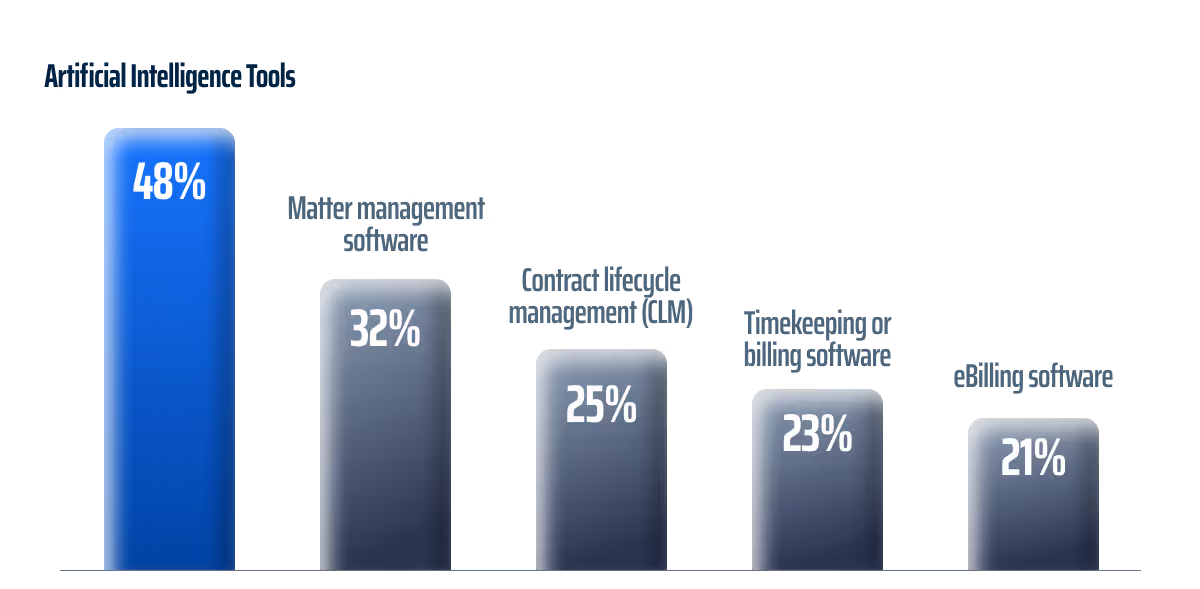
By investing in AI alongside matter management and eBilling, in-house teams are ensuring that AI has access to the comprehensive data set it needs to drive real business value.
Even more compelling is that 68% of corporate legal respondents say their organization’s investment in AI has increased year-over-year, a clear indicator that if legal teams haven’t made a plan for AI investment or adoption, they risk falling behind their peers.
AI as an operational standard
Corporate legal teams are extending AI’s use cases past simple administrative tasks and into more core legal processes. In fact, 84% of corporate legal respondents now say that AI is important to doing their best legal work.
Top daily workflows for in-house teams:
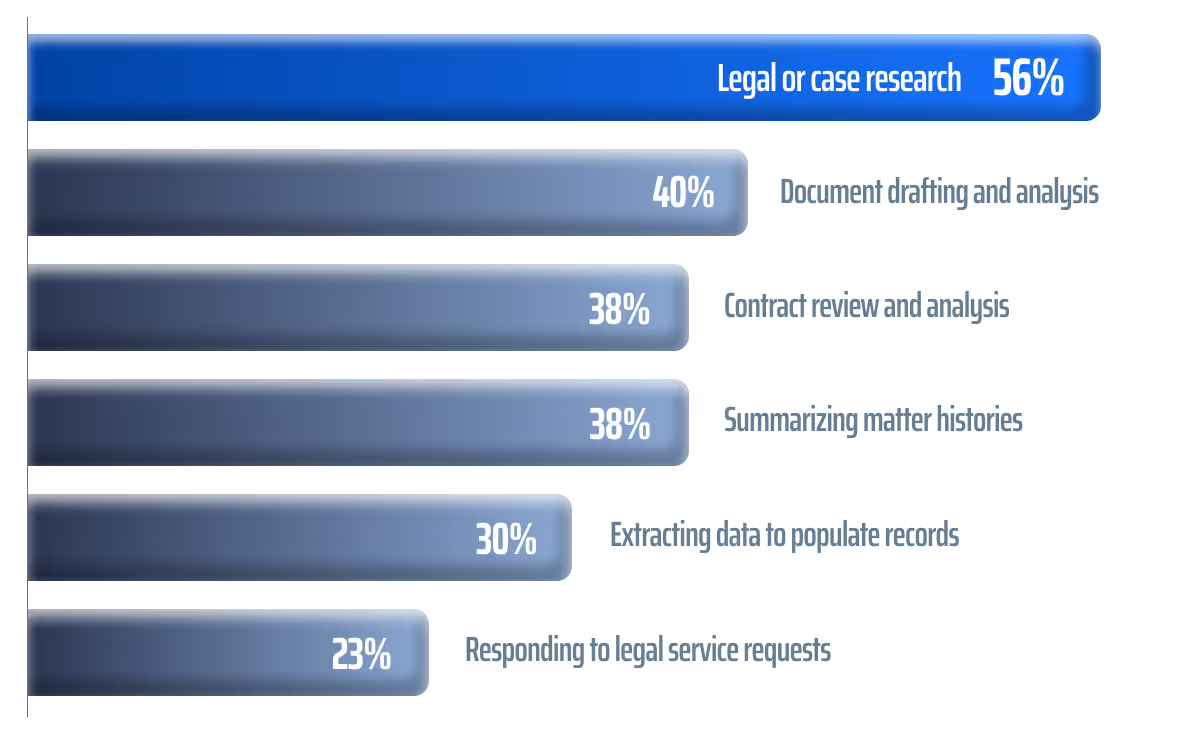
The data shows a clear shift toward AI as a force multiplier, helping teams manage the high volume of legal service requests and complex document reviews that typically bottleneck corporate departments.
The strategic payoff: From speed to insight
While completing work faster remains a top-tier benefit, in-house departments are finding that AI’s greatest value lies in the quality of the partnership they provide to the business.
The top benefits cited by in-house legal departments include:
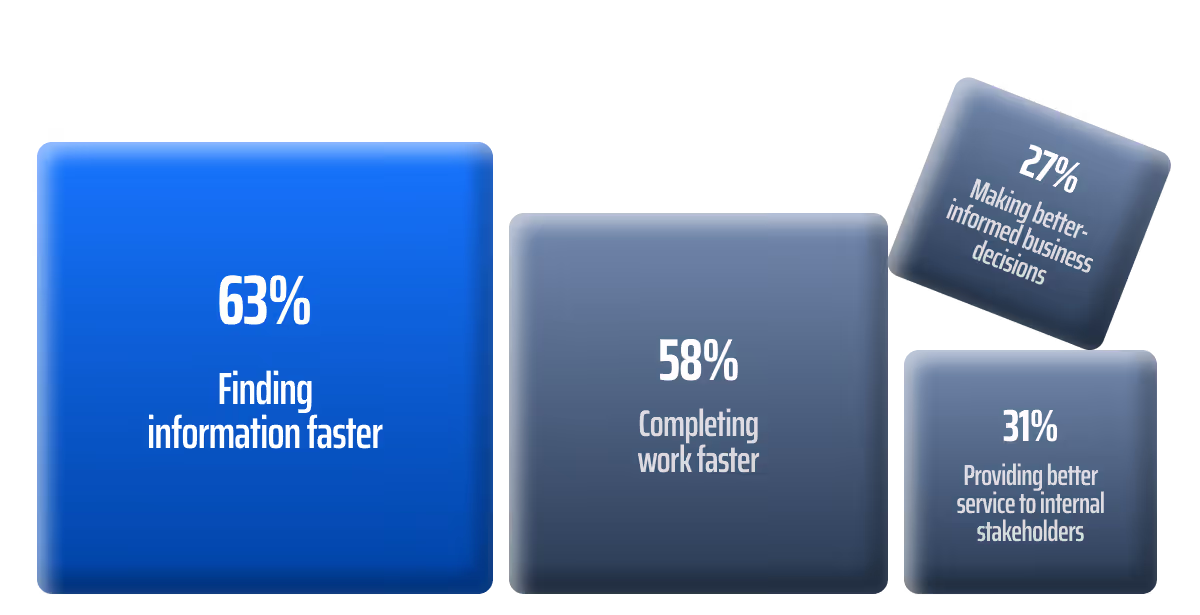
For a corporate legal team, making better decisions also means identifying risks before they become liabilities and providing the C-suite with data-backed legal guidance through personalized dashboards and real-time reports.
Overcoming concerns with trust
Even with high adoption, corporate legal teams remain cautious. Over half say concerns about accuracy, hallucinations, security, and data privacy are the primary reasons they are not using AI more.
To bridge this trust gap and reach a higher level of AI maturity, legal departments are focusing on three pillars:
- Clear policy: 48% of organizations already have an AI policy in place, with another 31% currently developing one.
- Dedicated training: Currently, 46% of in-house legal employees feel they receive sufficient training on safe AI use, suggesting that a significant portion of legal teams still need more educational support.
- Platform integration: 30% of corporate legal respondents noted that AI's lack of integration into current workflows is a major barrier, proving that AI is only as good as the system it lives in.
The next era for legal AI is agentic
The future of legal AI is agentic. These are tools that don't just generate text, but can autonomously execute tasks and workflows. The industry is moving fast: 39% of corporate legal departments are already using or currently implementing agentic AI tools, while another 25% are eager to adopt them.
This shift is also critical for a legal department’s hiring strategy. 75% of corporate legal respondents say it is important to work for an organization that embraces the latest tech. If you want to hire the next generation of top legal talent, you can't ask them to work in an outdated or disconnected environment.
Scaling your impact in 2026 and beyond
The most successful legal departments in 2026 won't be the ones with the most tools — they’ll be the ones that have woven AI deep into their existing workflows. To stay ahead of the maturity curve, corporate legal departments must move toward AI-native platforms that bridge the gap between matter management, outside counsel relationships, and real-time reporting.
Want to keep your legal department ahead of the curve? Check out the full State of AI in Legal Report and request a demo for your legal team.