How an Enterprise Legal Management (ELM) Platform Can Streamline Your Legal Service Requests

In-house legal teams juggle a wide range of legal service requests, from quick contracts to complex cross-functional issues. But without a centralized system, work gets lost, delayed, or misrouted. This blog explores how an enterprise legal management (ELM) platform like Litify can solve that by streamlining intake, triage, and request tracking on a single platform. With features such as self-service portals, automated routing, SLA tracking, and analytics, Litify enables legal departments to manage demand more predictably, reduce administrative overhead, and enhance visibility across teams. It also sets the stage for continuous improvement through built-in reporting and AI-powered insights.
In-house legal teams are increasingly expected to operate like service organizations by supporting the business at speed, prioritizing the right work, and demonstrating value across the enterprise. But when legal service requests arrive via emails, chats, spreadsheets, and hallway conversations, even the most experienced teams struggle to stay organized and responsive.
Without a structured way to capture and manage demand, requests can be delayed, misrouted, or lack the context needed for efficient decision-making. That friction impacts the business teams relying on timely guidance.
An enterprise legal management (ELM) platform like Litify helps legal teams regain control by creating a more consistent, transparent way to receive, prioritize, and manage legal work, setting the foundation for better service delivery, clearer expectations, and continuous improvement.
Understanding legal service requests (LSR) in corporate legal departments
Every in‑house legal team handles a broad mix of legal service requests. Some are straightforward, such as pulling a standard NDA, while others require specialist review or cross-departmental coordination. Some requests aren’t related to legal at all, such as HR questions, procurement issues, and operational tasks that end up in the legal inbox by accident.
Managing this flood of inbound work often means:
- Figuring out whether the request actually needs legal review
- Pushing simple or repeatable tasks through self‑service options
- Prioritizing time‑sensitive work, especially around quarter‑end
- Routing high‑stakes or technical matters to the right attorneys
Without a structured intake system, each team member must independently interpret and forward requests.
The challenges of managing legal service requests
Most teams already know their challenges — they live them every day. However, identifying obstacles helps illustrate why the old way of managing LSRs can’t keep pace with today's business standards.
1. Fragmented intake channels
Requests are received through email, meetings, chat tools, phone calls, or internal tools. When intake is scattered, it’s easy for work to get buried or delayed.
2. Lack of central visibility
Without a single queue, legal leaders can’t see ownership, status, or volume. The team is forced to rely on one-off updates or inbox searches to get the information they need.
3. Manual triage and resource drain
Inbox sorting and spreadsheet tracking might seem to work for a while, but they aren’t scalable methods. They divert attention from substantive work and make it hard to prioritize during busy cycles.
4. Data silos and missing metrics
When each system holds a piece of the story, there’s no real way to measure turnaround times or report on performance. It becomes challenging to demonstrate the department’s impact and position the legal team as a strategic partner rather than a cost center.
5. Compliance and SLA risks
Manual tracking makes it too easy to miss deadlines. Without structured alerts and dashboards, SLA commitments slip, which creates risk for the business.
More common pain points include:
- Lost requests and reactive work cycles
- Frustration among business partners when updates stall
- Lack of historical documentation for audits
- Delays in early‑stage matter setup
- Rising burnout from administrative overload
Core components of effective LSR management
All legal departments exploring their options for better LSR management should know what a strong system actually looks like.
The most effective LSR systems offer:
- A clear intake path that’s easy for business users to follow
- Prioritization rules that distinguish routine tasks from high‑impact work
- Routing logic that sends low‑risk items to junior staff or self‑service paths
- SLA guidelines that define expectations and keep the team aligned
- Reporting that tracks activity, response times, and outcomes
With these building blocks established, an ELM solution can take the heavy lifting off your team.
How an ELM platform centralizes and streamlines request management
This is where the real impact shows up. An ELM platform consolidates everything into one place so legal teams can focus on more complex, strategic work.
Here’s how a solution like Litify turns scattered requests into a more structured process:
Inbound request management and self‑service capabilities
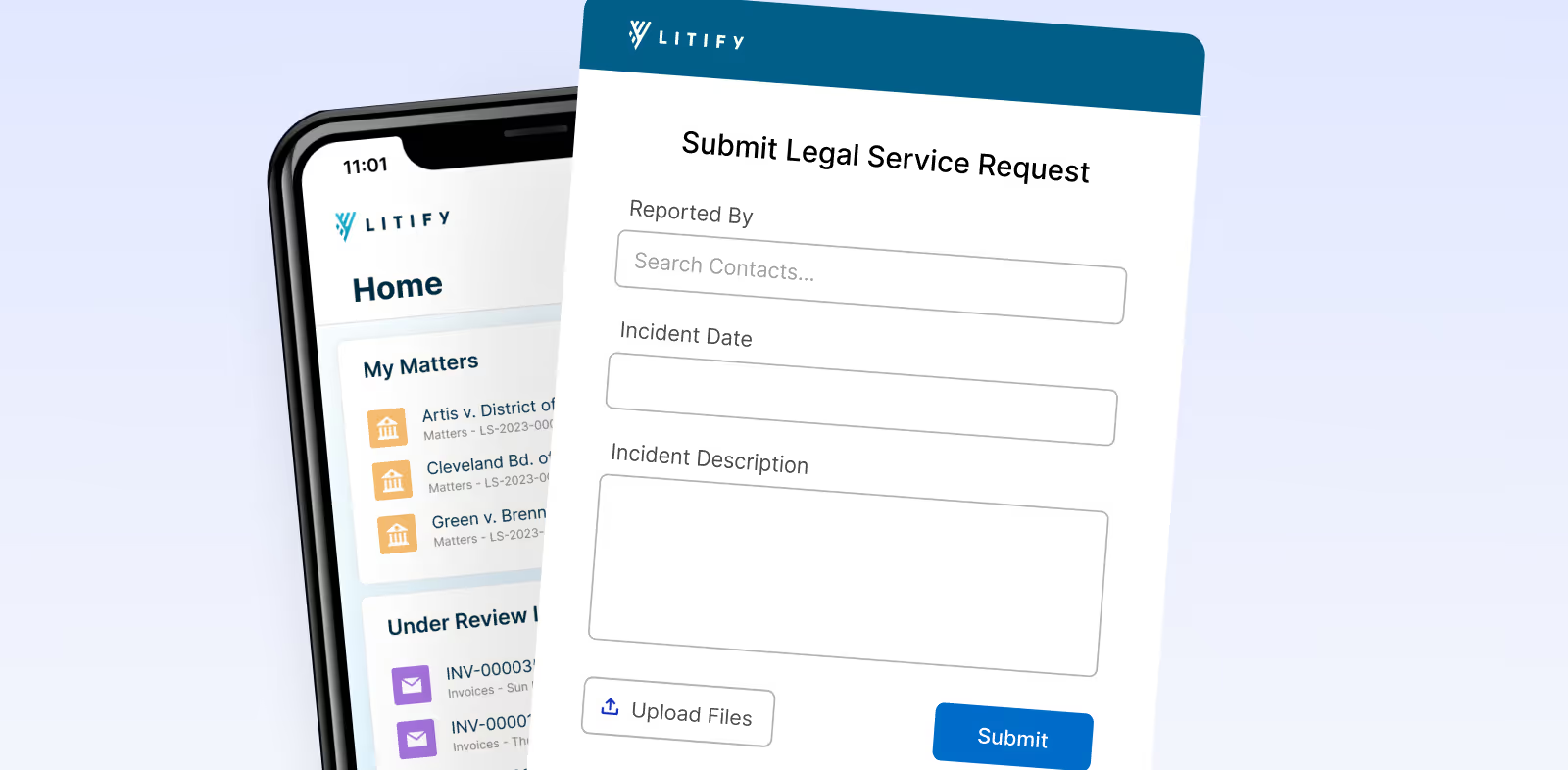
Business users can initiate common requests, such as contracts, NDAs, and approvals, through configurable online forms. A built‑in knowledge library answers frequent questions. In many cases, users can download a pre-approved document without waiting for legal approval.
Intelligent triage: Prioritizing and routing requests automatically
Automation can help categorize each incoming request and direct it to the right path. With an AI-powered intake workflow, requests are routed efficiently and appropriately so the team can take action or set expectations quickly. For example, a revenue-related commercial contract may be flagged for expedited handling, while a simple guidance request can be directed to a paralegal or a self-service workflow.
SLA tracking, transparency, and visibility
Real‑time dashboards track open, pending, and overdue items. SLAs can be set by request type, risk level, or department need. Every stakeholder sees what’s moving and what’s stuck, with no manual follow‑ups needed.
Benefits of using an ELM solution for legal service requests
Implementing an enterprise legal management solution helps your entire department run smarter:
- Everyone gets clearer visibility: Dashboards keep all stakeholders in the loop without constant check-ins.
- Matters move faster: Automated intake and routing help the right work reach the right people quickly.
- You get better data: Built‑in analytics highlight trends in volume, response times, and workloads.
- Workloads feel more balanced: With better forecasting, leaders can proactively assign work before it piles up.
- There’s less admin work: The system handles reminders, escalations, and updates automatically.
- Teams work together more smoothly: Shared portals keep legal and business teams aligned without having to chase down answers.
- It’s easier to stay accountable: SLA tracking and audit trails help you meet deadlines and reduce risk.
Inside Litify’s ELM solution: From request to resolution
Litify unifies the full legal service request lifecycle and creates a connected hub that supports everything from intake to resolution.
Here’s what that looks like in practice:
Employee self-service portal
Internal stakeholders use a customizable web portal to submit requests through structured forms. Fields can be configured by request type, department, or business unit, and required fields help standardize intake before it reaches legal.
Knowledge base
Legal teams can leverage a searchable library of pre-approved templates, FAQs, and guidance documents. It can be embedded directly into intake forms to resolve common questions or allow users to download documents without legal review.
Multi-channel data capture
The platform can accept requests from multiple places that teams are already using, such as email, web forms, or intranet tools, and bring them into a single dashboard. Intake data is standardized, so legal can track and act from one place.
Intelligent and automated intake workflow
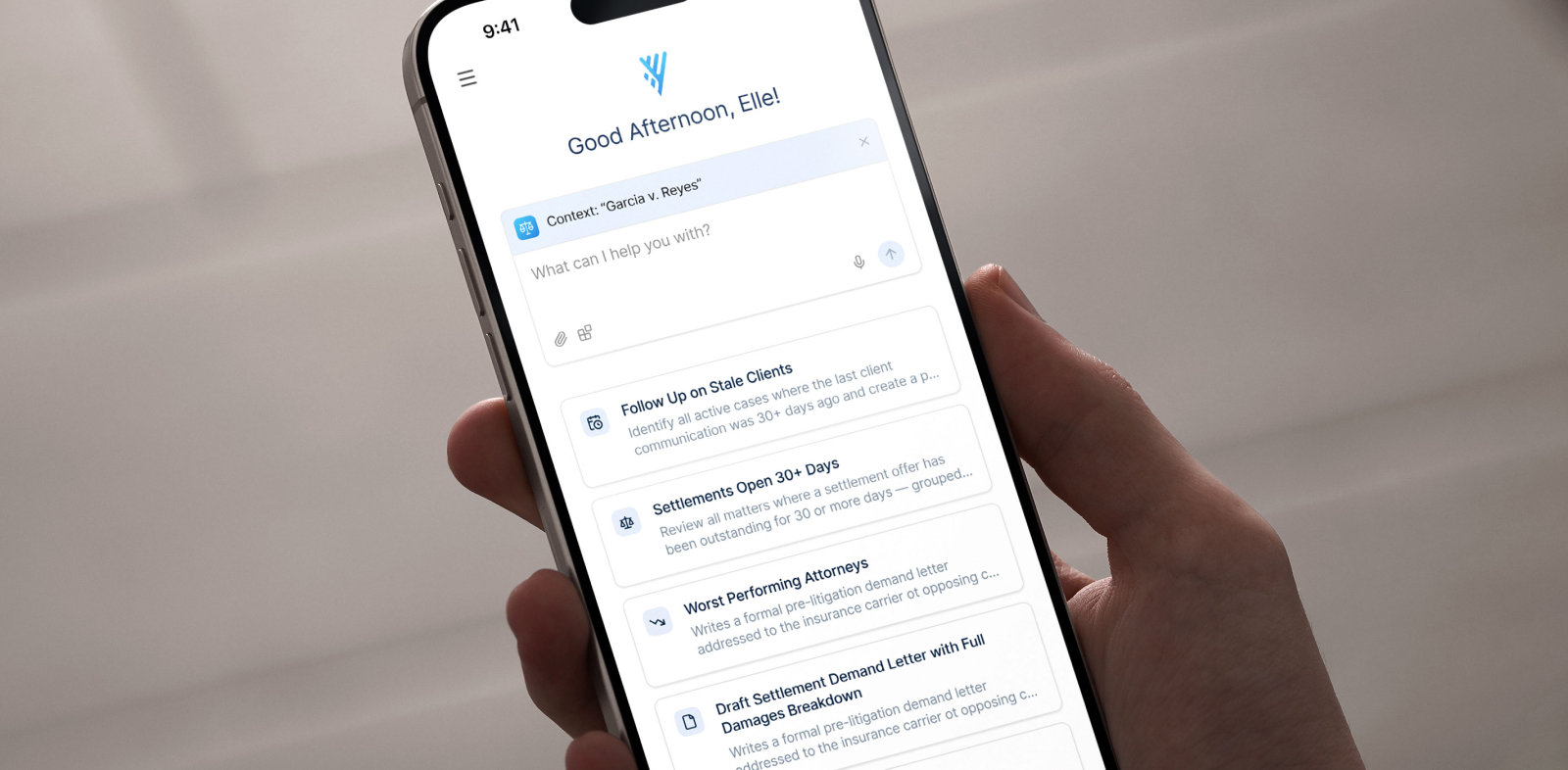
AI-powered intake workflows help the legal team continue to provide assistance to the wider organization while freeing up time for more strategic work. The intake agent can auto-respond to frequently asked questions, share automated responses, and automatically create a record to track the request. Since everything is happening within a unified platform, the legal team has a complete view of incoming and existing requests.
Routing logic determines where each request should go based on defined rules or machine learning models. This can include criteria like contract type, department, risk level, or urgency. Tasks are automatically assigned, minimizing manual triage for your team.
From request to matter creation
Once a request is approved, Litify turns it into a structured matter record. Intake details are moved to the new file, and the system pulls in the documents tied to that request type. From there, task workflows begin automatically so the team can pick up the work right away. Everything lands in the same place for a clean handoff from intake to matter.
KPI dashboards and SLA tracking
Customizable dashboards give you a clear view of how work is moving. You can track time-to-assignment, resolution speed, and SLA progress, and then filter by team, attorney, or request type to quickly spot slowdowns and adjust workloads.
Comprehensive reporting and analytics
All activity within the platform is captured for reporting. Litify offers robust reporting and integrations with external BI tools. Legal ops teams can track trends across intake volume, turnaround times, and resource utilization.
The future of legal service requests: AI, insights, and continuous improvement
The next phase of legal operations is driven by automation and insight. Emerging legal AI automation tools will categorize requests, anticipate capacity constraints, and identify potential risks earlier in the process.
Predictive analytics will help legal teams forecast demand, especially around big commercial events like quarter‑end. And as teams refine their processes, they can continue to automate more work to reduce friction for both legal and business partners.
Want a firsthand look at how Litify’s ELM platform helps corporate legal teams do more with less? Request your demo today.
FAQs
What is a legal service request (LSR) and why does it need ELM management?
An LSR is any request for legal support, from document reviews to contracts to guidance. An ELM platform centralizes intake and tracking, ensuring nothing gets lost and enabling teams to manage their work efficiently.
How does Litify’s self-service portal reduce lawyer workload?
Standard requests can be submitted through structured forms or answered through a built‑in knowledge library. This reduces repetitive questions and back‑and‑forth.
What SLAs should in‑house legal teams set for LSR processing?
Most teams set response times based on risk, request type, and business impact. The platform enables you to configure SLA tiers and track them in real-time.
How secure is data in Litify’s legal request management tools?
Litify leverages the power of the Salesforce platform, and together, Litify and Salesforce deliver enterprise-grade protections like encryption, multi-factor authentication, and granular access controls.