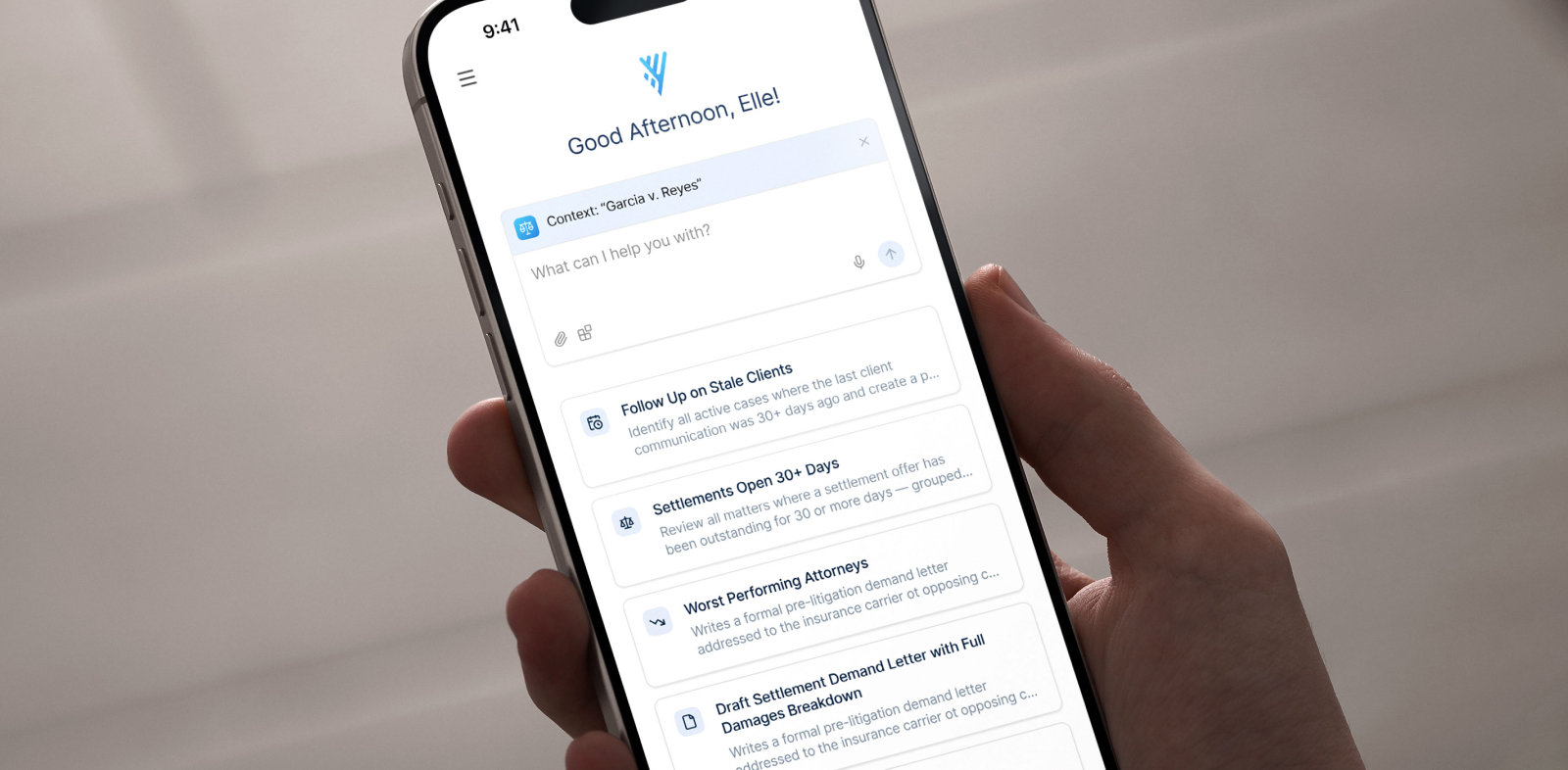
Standardizing Insurance Defense Matter Management


Standardizing insurance defense matter management helps law firms and carriers reduce rework, improve billing compliance, control litigation costs, and create more consistent case outcomes. This blog explains how insurance defense teams can streamline intake, workflow automation, document management, budgeting, eBilling readiness, reporting, and matter closure through standardized processes and technology. It covers best practices for carrier guideline enforcement, LEDES and UTBMS billing hygiene, audit trails, KPI tracking, litigation workflow templates, and insurance defense analytics. The article also explores how platforms like Litify help firms build scalable, compliant, and data-driven insurance defense operations from intake through resolution.
Key takeaways
- Standardization helps insurance defense teams reduce rework from case assignment through closure.
- Carrier billing rules should be built into the workflow, not checked only at invoice review.
- Budget controls, cleaner time entry, and pre-bill checks help reduce write-downs.
- Case resolution data should feed reporting and process updates.
- Litify leverages the power of the Salesforce platform to connect intake, matter management, eBilling readiness, and reporting.
When it comes to matter management, insurance defense firms often lose time and margin due to inconsistent intakes, guideline compliance that happens too late in the process, and resolution data that gets lost after the matter ends.
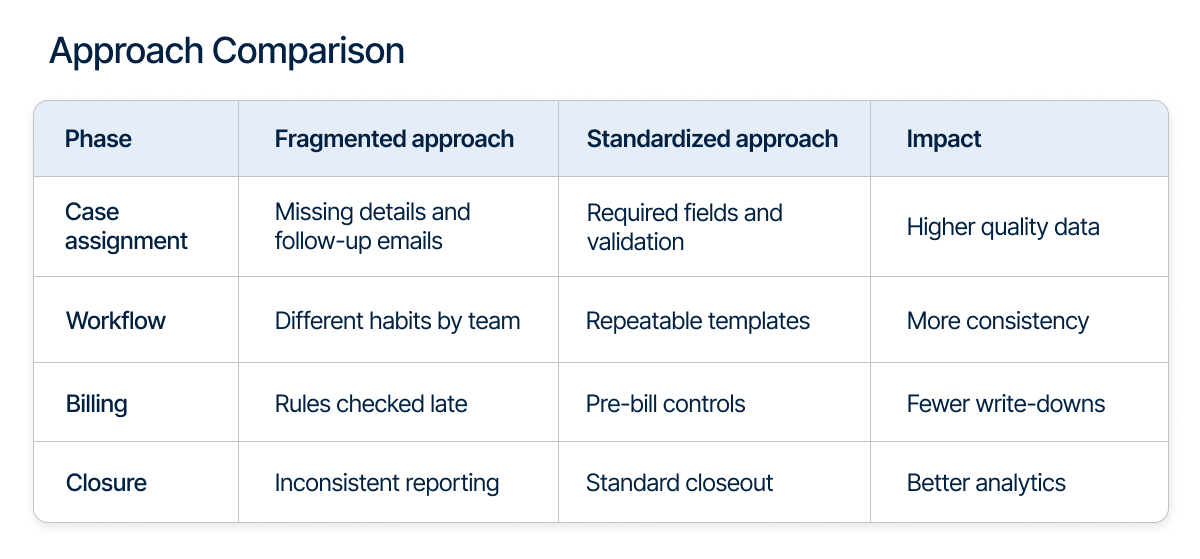
Standardization fixes that by creating a consistent operating model across intake, workflow, document management, budgets and billing, case closure, and analytics. On top of that, creating standard processes helps improve technology adoption for insurance defense firm leaders, legal ops, panel counsel, and claims executives at carriers and third-party administrators (TPAs).
What does it mean to standardize matter management for insurance defense?
Standardizing matter management for insurance defense means using a single shared structure that aligns claims and litigation workflows across teams and matter types.
Insurance defense matter intake standardization
What data must be captured at intake every time?
A strong insurance defense intake process always captures:
- The carrier
- Third-party administrators (TPA)
- Adjuster
- Claim ID
- Insured
- Venue
- Opposing counsel
- Policy details
- Limits
- Coverage flags
Required fields, duplicate checks, attachment rules, and “cannot submit without” controls help prevent incomplete files from moving forward.
Automating triage, conflicts, and assignment
Conflict checks need to happen at intake for insureds, co-defendants, witnesses, and related matters, in line with ABA Model Rule 1.7.
Triage can then sort matters by case type, venue, exposure, and client requirements, while assignment rules account for practice group, jurisdiction, capacity, and panel requirements.
Some issues may hard-stop intake, while others move through supervised exception handling with documented approval.
First 14 days after matter intake
In the first two weeks, teams should set:
- Naming conventions, metadata, matter IDs, and a standardized parties list
- Core deadlines, including answer date, removal, service, preservation hold, and initial disclosures
- Early case assessment with a liability snapshot, damages map, and exposure bands tied to next steps
- Initial budget thresholds at intake, not invoice review
Carrier guideline compliance and defense workflow templates
How do you enforce carrier guidelines inside the workflow?
A connected matter management platform helps firms build carrier rules into the file through:
- Approval workflow for experts, depositions, travel, dispositive motions, and mediation spend
- Prompts for estimates, adjuster approval, and reason codes
- Automated time capture that screens narratives against carrier billing guidelines to ensure every entry complies with carrier standards
- Exception handling with a clear record of who approved the change and why
That structure can reduce write-downs on invoices before they go out.
Case-type task templates for high-volume insurance defense
Task templates give teams a more reliable way to run slip-and-fall, auto liability, construction defect, trucking, and professional liability files by launching the right steps and timelines for:
- Pleadings
- Discovery
- Depo prep
- Experts
- Mediation
Role-based assignment and a clear “definition of done” at each milestone keep work moving.
Audit trails that survive market conduct exams and disputes
Insurance defense teams need a single matter record with time-stamped approvals, changes, and communications.
Some fields should remain fixed, while others should allow edits only with reason codes.
Unified matter workspace and document control
Building a single source of truth for case files
Strong document management helps maintain a clear file structure across the practice through:
- Folders organized by litigation phase
- Standardized naming conventions
- Version labels for draft, filed, served, produced, and privileged documents
- Clear permissions and external sharing rules for carriers, third-party administrators, and vendors
Discovery, records, and privilege workflow standards
In insurance litigation, discovery and records work better when teams follow the same process for:
- Medical records, wage loss, police reports, repairs, and surveillance
- Privilege logs and work-product handling
- Chain-of-custody and production history in the matter record
Proactive budgeting, time capture, and eBilling readiness
Preventing insurance defense budget overruns
Budget review should align with major milestones, such as pleadings, discovery, experts, and mediation.
If exposure changes or new parties enter the case, the matter should flag the variance early.
Time entry and LEDES/UTBMS hygiene
Same-day time capture, clear narrative standards, and pre-submission validation help reduce rework. Firms can strengthen this process with automated time tracking.
Streamlined resolution and matter closure
Closure checklist and settlement strategy templates
A matter shouldn’t close until final invoices, releases, dismissal orders, and required closeout items are complete. Settlement templates can also help teams prepare with more consistency.
Final report standardization and outcomes tagging
Final reports must follow a consistent structure across facts, liability, damages, key events, and settlement rationale. Outcome tags then make closed matters easier to analyze later.
Analytics, KPIs, and continuous improvement
Which insurance defense KPIs actually predict outcomes?
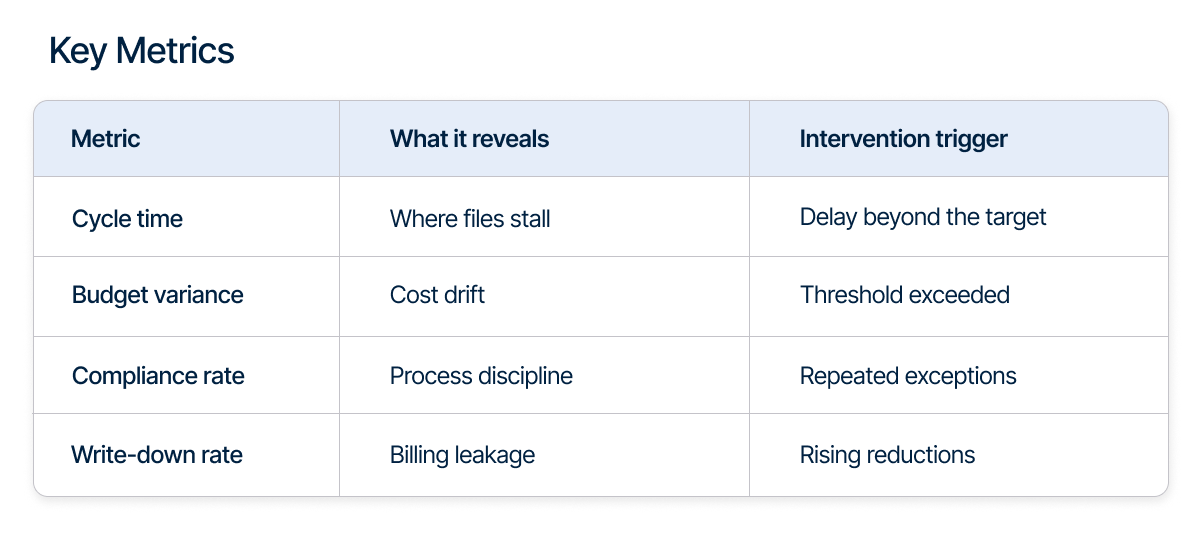
KPIs should show where the process is slipping across teams, and stronger reporting makes those patterns easier to spot, as this insurance defense case study shows.
How closed matters feed template improvements
Closed matters should drive updates to templates, fields, and training. If the same delays or exceptions keep appearing, the workflow should change.
Technology, security, and adoption for insurance defense workflows
Core capabilities of a strong insurance defense matter management platform
Insurance defense matter management platforms should support:
- Intake validation
- Workflow automation
- Document control
- Approvals
- Reporting
- Budgeting
- Time capture
- eBilling readiness
- Audit trails
- Permissions
Many firms are also assessing how AI for insurance defense fits into existing workflows.
Security, retention, and audit readiness for litigation and claim data
Insurance defense data needs strong access controls, least-privilege permissions, safeguards for external sharing, and logging.
Vendor assurance signals, such as SOC 2, are also important, along with retention standards, defensible disposition, backup, recovery, and manual fallback plans.
Run every insurance defense matter on the same operating rhythm with Litify
See how Litify helps insurance defense teams standardize from intake to resolution.
FAQs
What is LEDES, and why does it matter for insurance defense?
LEDES is a standard format for electronic legal billing. Many carriers require invoices to follow specific billing formats, codes, and submission rules.
How does standardization reduce insurance defense cycle time?
It reduces intake cleanup, missed handoffs, and inconsistent file handling, helping matters move through each phase more quickly.
What are the case management standards of practice for insurance defense?
They usually come from ethical duties, court rules, carrier requirements, and internal firm procedures that shape how matters are opened, managed, billed, and closed.
How do firms enforce carrier billing guidelines without policing every invoice?
Firms build those rules into the workflow through task prompts, approval workflows, budget controls, and pre-bill review before invoices go out.
What KPIs should an insurance defense practice track?
Track cycle time, budget variance, compliance rate, write-down rate, workload distribution, staffing leverage, and early reporting metrics such as time-to-first-report.
How does matter management standardization affect an attorney’s professional judgment?
It standardizes the operational side of the file while leaving legal analysis, case strategy, and negotiation decisions to the attorneys.
What is the ROI of standardizing intake-to-resolution workflows?
ROI often shows up in lower rework, fewer billing reductions, tighter budgets, faster cycle times, and stronger reporting across the practice.