Claims Litigation Workflows That Unify Collaboration Gaps

Managing insurance litigation across multiple panel firms is complex, especially when systems, workflows, and reporting standards don’t align. Centralized claims litigation management helps carriers bring structure to the process. With shared metrics, standardized workflows, and real-time visibility, teams can track billing, catch delays, and improve outcomes without micromanaging. Firms know what’s expected, and claims teams gain the insights to act faster and recover more. From matter intake to final resolution, a platform like Litify creates consistency, accountability, and smoother collaboration.
Litigation moves fast, but the systems behind it often don’t.
Claims litigation managers commonly have to juggle dozens of matters across multiple panel firms that use different systems. Without real consistency, it’s difficult to track progress and stay ahead of issues, causing a confusing disconnect between claims and counsel.
Claims litigation management helps carriers bring order to that complexity. Shared defense processes give carriers better visibility while setting clear expectations for how firms handle matters.
Litify supports this shift by bringing all claims defense workflows into a single, centralized platform. Everyone works from the same solution, so matters can keep moving without anything getting lost between teams.
Why insurance defense management matters for claims litigation managers
Running a litigation program means tracking the business side of every case. Claims leaders are responsible for monitoring budgets, reviewing billing compliance, comparing performance across firms, and making sure defense strategies reflect both risk tolerance and organizational priorities. That requires a system that supports accountability and coordination at scale.
That’s why insurance defense practice management is a core part of modern claims work. When teams don’t have clear standards for how matters should be handled, the work becomes reactive. It’s harder to catch delays early, compare firm performance, or follow up on billing irregularities. Without a consistent process, subrogation opportunities often get flagged too late to recover.
A more structured approach to claims litigation management gives teams the tools to see what’s working and what’s not, enabling them to make decisions grounded in reliable information.
Why claims teams and defense counsel struggle to stay aligned
Most carriers work with multiple panel firms. Each firm has its own tech stack, processes, and approach to documentation. Collaboration is hard to enforce and even harder to measure.
Some common problems include:
- Delays in reporting or updates: Case statuses can go days or weeks without updates, and claims handlers have to follow up manually or make decisions without the full picture.
- Different formats for status reports: One firm submits a spreadsheet, another sends a PDF, and a third provides case updates over email. There’s no easy way to compare or roll up information across firms.
- Escalations that come too late: When problems are flagged late, it’s usually because there's no built-in trigger in the workflow, so teams miss the window to prevent avoidable costs or delays.
- Billing that doesn’t follow agreed-upon rules: Invoices show up with the wrong codes or incomplete descriptions, and someone has to track down the firm just to get it processed.
All of these setbacks create friction. Disorganized claims defense workflows leave gaps that can affect reserves, strategy, and trust between the carrier and counsel.
What is subrogation in insurance?
Subrogation in insurance is the process of recovering money from the party who caused the loss after a claim has been paid. For example, if a driver is rear-ended and the carrier pays the claim, the carrier might pursue the at-fault driver’s insurer to recover those costs.
This process relies heavily on timing. If defense counsel doesn’t flag a case as subrogation-worthy early on, they might miss their chance.
Preserving subrogation rights in insurance requires fast action and clean documentation. That’s easier to do when teams work from a single platform that surfaces issues early.
The cost of fragmented insurance defense workflows
Every matter leaves a trail: status updates, billing entries, emails, documents, risk flags. But when those pieces live in different systems, no one sees the full picture until it’s too late. Teams will chase threads across platforms, only to realize the pattern was there all along.
Without litigation collaboration software, the gap between claims and counsel becomes harder to manage. Case milestones slip when timelines aren’t tracked in real time, and delays often go unnoticed until they’ve already pushed the matter off course.
Billing becomes another point of tension. If a firm submits an invoice that doesn’t match a client’s guidelines, the carrier may reject the charges or have to write them down after the fact.
Meanwhile, potential subrogation opportunities get buried, either flagged too late to act on or noted in a system that no one else is monitoring. Even when the signals are there, they rarely reach the right person soon enough to make a difference.
And because every correction takes extra time and effort, the cost of managing litigation quietly grows behind the scenes.
What centralized insurance defense platforms make possible
After years of working across disconnected tools and processes, many carriers are shifting toward a more unified model.
A centralized claims platform creates an environment to manage litigation at scale. Timelines, billing, escalations, documents, and analytics all live in the same platform, aligned to a single set of standards. Each firm follows the same workflows, submits the same required information, and moves cases forward within a shared framework.
That kind of structure makes true governance possible by:
- Embedding expectations directly into the platform
- Guiding escalations through predefined steps
- Enforcing billing rules automatically
- Giving everyone access to the same real-time information
- Preventing matters from moving forward without the required steps
It also creates space for better decisions. With everything connected, claims leaders can act on current data, and legal operations can spot issues as they develop. Finance can even track spend patterns while they’re still in progress instead of months after the fact.
More claims organizations are adopting this model because it brings better control and a path to improving carrier-counsel collaboration.
How carrier-defined shared systems improve claims defense workflows
Once the core structure is in place, the value of a single source of truth becomes clearer in day-to-day work. Every firm uses the same workflow to escalate risks, submit documentation, and communicate updates.
From there, teams start to see real improvements across three areas:
Portfolio-wide visibility
Dashboards show how every matter is progressing, whether you’re looking at a single case or the performance of an entire panel firm. Because everything runs on a shared platform, trends emerge faster, and delays are easier to spot.
Structured collaboration
Forget the back-and-forth. Defined workflows and real-time collaboration give defense counsel a streamlined way to share updates, escalate issues, and document progress. Each step gets logged in one place, so claims teams have the full story when it’s time to respond.
Trusted reporting
When everyone works from the same set of rules, the resulting reports are more useful. Consistent reporting improves visibility into forecasts, reserves, and performance across the board.
Teams can use their shared claims analytics to review billing, track case progress, and identify high-risk matters.
How centralized systems improve subrogation recovery
Carriers have a narrow window to recover losses, and it closes quickly when they miss early signs of subrogation potential or escalating risk.
Shared claims analytics make it easier to track a case’s progress in real time. When updates, billing activity, and risk flags are all part of the same system, teams can spot patterns they’d otherwise miss, like a sudden jump in billed hours, repeated delays, or unusually high litigation costs.
These are signals that a case might be taking an unexpected turn, but instead of finding out after the fact, claims teams can respond while there’s still time to make an impact. And because the data is pulled directly from a governed platform, you make decisions based on what’s actually happening.
Governing panel firms through shared metrics standards
Performance tracking doesn’t work if every firm is measured differently, because there’s no reliable way to compare outcomes.
Shared insurance litigation metrics allow teams to:
- Define KPIs in a centralized system and apply them across the entire panel
- Compare firms on response times, escalation rates, and resolution speed
- Identify billing patterns that cause delays or write-downs
- Set realistic expectations based on historical trends and matter types
- Track improvement over time and benchmark performance against peers
With this structure in place, carriers can manage performance without micromanaging. Firms, in turn, gain clarity into how they’re being evaluated and what they need to do to maintain a strong position on the panel.
How Litify serves as the platform of action for claims litigation
Litify supports every piece of the insurance litigation lifecycle, from matter intake through final billing. Carriers and firms operate in the same environment, using shared tools and workflows that align with how litigation actually moves. Litify's platform of action enables the entire insurance ecosystem to reduce friction, improve carrier and firm collaboration, and use data to drive equitable results.
This is what claims litigation management software should look like. With Litify, teams can:
Standardize how cases are handled
Firms use matter plans to set up reliable workflows based on claim type, with tasks routed to the right roles and key steps shared upfront. It’s a simple way to drive consistency and stronger outcomes.
Built to leverage the power of the Salesforce platform, Litify further tailors the platform specifically for legal professionals, making it perfectly suited for claims litigation.
- Select the best legal team for every matter, every time, based on real-time insights.
- Automated suggestions, powered by historical data and demographic factors, help you choose the right firm to achieve the best settlement outcomes.
- Allow your best practice to become your common practice.
Monitor live performance across firms
Dynamic dashboards give carriers and firms a clear view of how work is progressing. When time-on-desk or billing starts to slow down, teams can see it early and adjust before it becomes a larger issue.
Enforce billing and communication guidelines
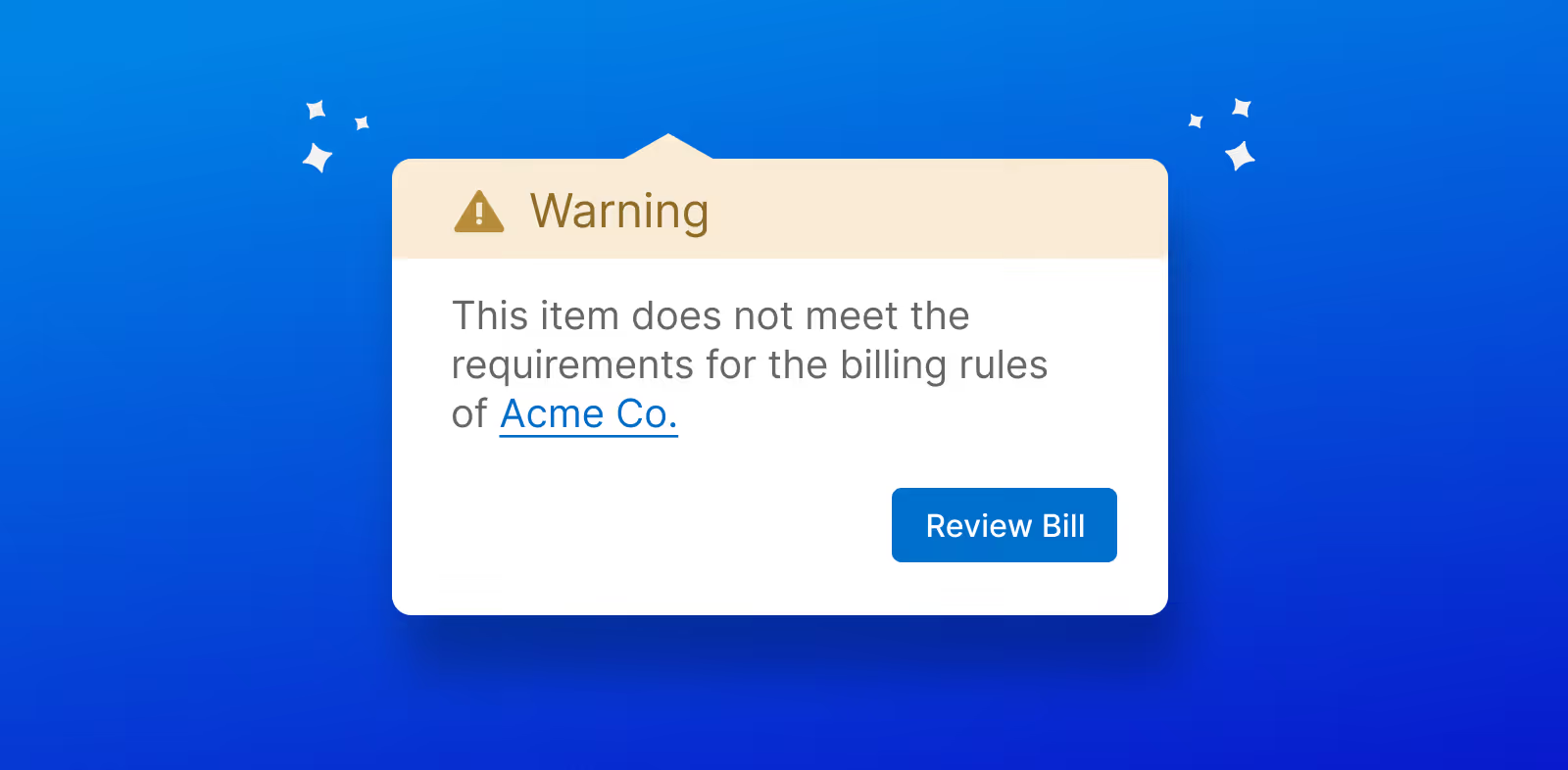
Litify automates time and billing in the background, capturing work as it happens and applying real-time compliance checks. Attorneys don’t have to waste time reworking entries, and firms aren’t chasing down disputed payments.
Litify becomes a playbook for success, supporting every attorney on every matter and enabling them to:
- Reduce errors in billing.
- Track time and submit bills more accurately with preloaded carrier billing guidelines.
- Leverage automated notifications to ensure bills are submitted correctly the first time.
Improve visibility across every matter in flight
Centralized documents, updates, and communication keep everyone on the same page. Carriers gain transparency, firms get credit for their work, and both stay aligned as cases evolve.
Real-time dashboards and reporting provide new levels of transparency into performance. Carriers and defense firms can now work together in a shared language toward better litigation outcomes.
Bring structure to every matter, every firm
Lack of visibility, inconsistent expectations, and slow feedback loops hurt results and relationships. That’s why claims litigation needs a single platform of action.
It’s easier to hit targets when you know the expectations and can see progress. Litify helps both sides stay in sync so litigation can move forward consistently.
Request a demo to see how Litify enables a more connected insurance workflow.
FAQs
What is claims litigation management, and why is it critical for claims teams?
Claims litigation management helps carriers bring structure to how claims are handled across internal teams and panel firms. It’s the difference between reacting to issues after they happen and having a clear path forward from day one. When there’s no shared system in place, it’s harder to coordinate strategy, enforce billing rules, or keep legal spend on track. Over time, that lack of alignment leads to missed opportunities and strained relationships between carrier and counsel.
How do carriers effectively govern panel firm performance?
The most effective carriers rely on shared KPIs, real-time dashboards, and centralized systems to track metrics like billing velocity, escalation rates, and resolution times. This structure enables better oversight without micromanaging and helps panel firms understand precisely what’s expected.
What are claims defense workflows, and how are they standardized?
Claims defense workflows include the repeatable steps that move a matter from intake through resolution. A typical workflow may consist of steps like:
- Assigning the right team based on claim type and complexity
- Surfacing key deadlines and escalation points early
- Submitting standardized status updates and documentation
- Routing approvals and decisions through defined channels
- Capturing billing activity and compliance checks in real time
Platforms like Litify help standardize these workflows through matter plans that guide activity from start to finish, ensuring every case moves forward with structure and accountability.
How does defense management impact subrogation recovery?
Insurance defense management improves subrogation outcomes by increasing visibility into case status and aligning strategy early, helping claims teams act while recovery windows are still open.
How does a centralized platform improve litigation oversight and cost control?
When everyone works in the same system, it’s easier to keep litigation on track. A centralized platform gives carriers and counsel one place to manage case activity, billing, and communication.
Billing rules are applied automatically, costs are tracked in real time, and progress is visible at every stage.