AI Tools for Legal Documents: Draft, File, And Review

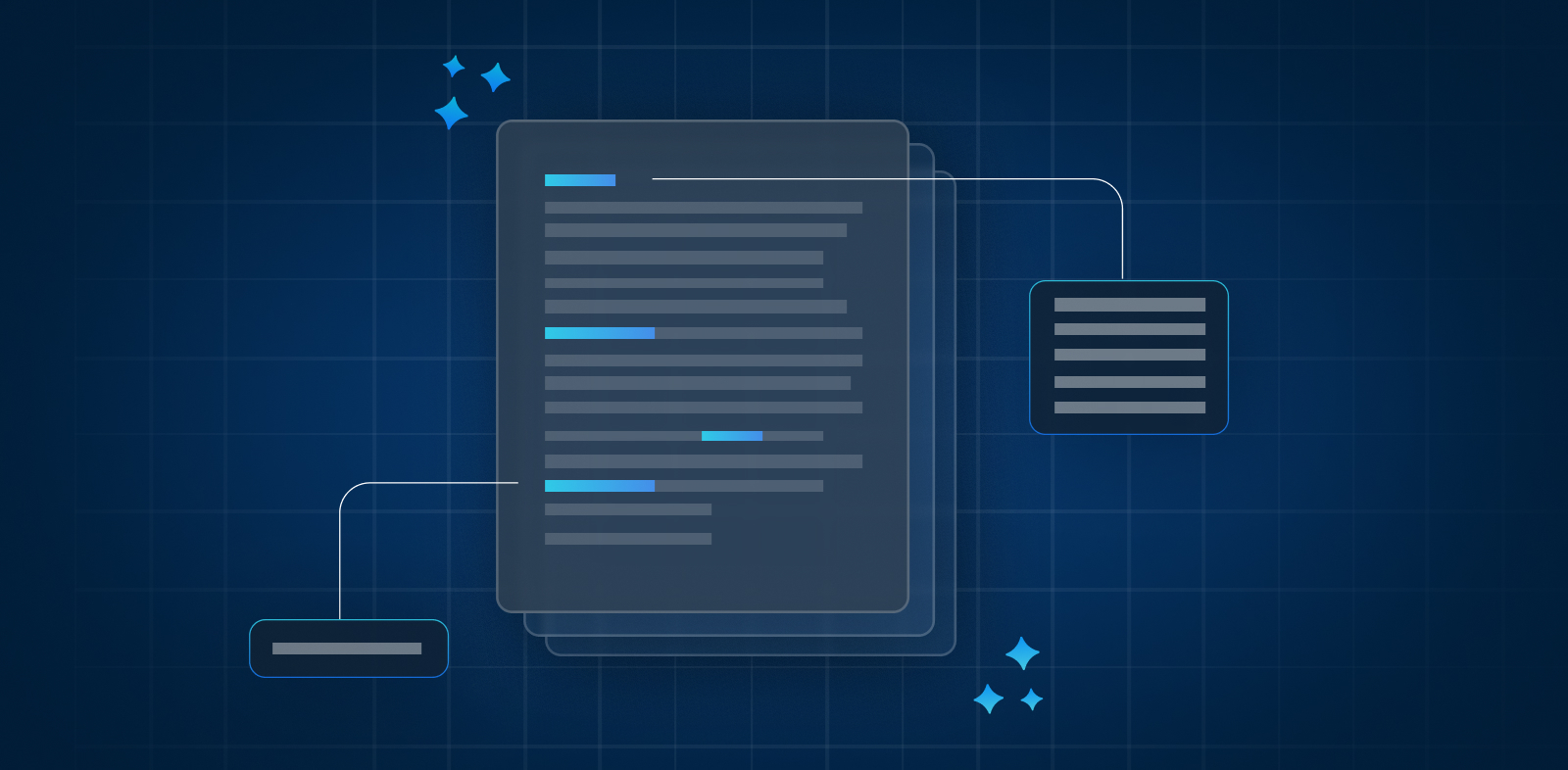
AI is reshaping how law firms and legal teams handle document-heavy tasks. From drafting and reviewing to e-filing, using AI for legal documents helps firms save time, reduce errors, and stay compliant without disrupting how they already work. This blog explores the biggest areas of AI impact, including smart drafting templates, clause-checking tools, and automated filing. It also explains how legal AI workflow automation fits into a platform like Litify, where document generation, automation, and collaboration all happen in one place. Whether you're part of a law firm or legal department, Litify makes it easier to start using AI across your entire document management process.
Legal work moves fast, but document workflows often don’t. Drafting, reviewing, and filing still involve too many tools and take too much time.
Using AI for legal documents has moved from optional to essential. At its most effective, AI can be embedded into the day-to-day document management process, helping teams move faster through tasks that used to drag.
And when AI tools are built directly into your workflow, as they are with Litify, they help firms improve accuracy and take on more work without burning out their teams.
Let’s look at how legal AI workflow automation is reshaping legal document work, and where the biggest impacts can be seen.
Why legal AI workflow automation is a game-changer
Modern legal teams often need to handle more matters with fewer resources, and this pressure can create delays, errors, and inconsistent documents.
Automation helps eliminate bottlenecks and standardize processes across the board. In practice, this could look like:
- A document that used to take an hour to draft can now be generated in minutes.
- Review time is reduced with AI-assisted clause checking.
- Filing errors drop when documents are automatically routed and formatted.
Litify helps teams embed legal AI workflow automation into their existing processes without overhauling their existing systems. The AI tools work alongside you to reduce manual labor, but not to replace your human judgment.
Where AI for legal documentation delivers the biggest impact
1. Drafting and template generation
Legal teams already rely on templates, but combining them with AI takes it a step further. With document drafting automation, AI can generate new content from past filings or using standard language, adapting it to the matter at hand.
AI accelerates drafting tasks across the case lifecycle by:
- Creating first drafts of discovery requests, motions, and client communications.
- Pulling standard clauses based on practice area or jurisdiction.
- Merging case data from the existing database to auto-fill documents.
2. Document review and quality control
Document review is one of the most time-consuming parts of legal work. AI helps shorten that cycle without sacrificing accuracy in the following ways:
- AI tools trained on legal language can flag missing clauses, contradictory language, or compliance risks.
- Document review automation catches formatting inconsistencies that would otherwise go unnoticed.
- AI legal assistants summarize complex agreements so attorneys can make faster and more informed decisions.
3. E-filing and workflow integration
Filing is often the final step, but it can cause significant delays when forms are incomplete or sent to the wrong place.
E-filing automation makes a measurable difference by simplifying the final steps of document handling:
- AI auto-fills court forms using data already in the matter.
- Completed documents are automatically saved and linked to the record.
- Teams can route filings based on practice area, jurisdiction, or urgency.
Integrating AI into legal workflow automation
AI tools work best when they’re not treated as separate add-ons. When built into the same platform where teams already manage work, they feel like a natural extension. That includes everything from routing approvals to managing legal documents in one place.
Litify embeds legal AI workflow automation into its end-to-end platform:
- Draft, edit, and file documents without switching tools.
- Generate matter summaries and highlight key insights throughout the case lifecycle.
- Analyze transcripts from court proceedings and depositions.
Because Litify is also a comprehensive case management solution, you get built-in audit trails, version control, and secure access controls without needing to manage third-party connections.
Connecting legal professionals with AI
AI in law is really about giving attorneys more time to think strategically. Tools that act like AI assistants help support their legal judgment.
For law firms, this means uncovering deeper insights from case files while capturing more billable time and improving accuracy. For in-house teams, it means faster turnaround on service requests and tighter control over spend.
In both cases, legaltech automation enables teams to work smarter inside the tools they already rely on.
Getting there doesn’t require starting from scratch. It begins with building internal confidence: training teams to interact effectively with AI tools, establishing guardrails for responsible use, and selecting a platform that integrates seamlessly with existing workflows.
Get started with legal workflow automation
You don’t need to overhaul your whole process to work smarter. Automating the drafting, reviewing, and filing of documents is a simple yet powerful upgrade that enables your team to move faster without sacrificing precision.
See how Litify connects AI-powered tools across your operations with:
- Built-in document generation
- Configurable process setup
- Seamless e-filing tools
Schedule a demo to see how AI-powered document management with Litify can unleash your team’s full potential.
FAQs
How can AI help with legal document drafting and review?
AI handles the heavy lifting. It can pull together a draft in seconds, flag what’s missing, and break down long agreements into something actually readable. It’s like handing the tedious parts off to a smart assistant, so your team can spend more time on legal work.
What’s the difference between document automation and workflow automation?
Think of document automation as the “what,” like generating a motion or filling out a form. Workflow automation is the “when and where,” routing that motion to the right person and keeping everything moving without manual follow-up.
Is AI in legaltech secure and compliant with client confidentiality?
Yes, especially with Litify. The platform utilizes a closed AI model, encrypted data handling, and role-based access — and it’s built on Salesforce’s secure, enterprise infrastructure. Everything is traceable, so you always know who did what and when.
Can AI integrate with existing document management systems?
It depends on the system, but with Litify, you’re covered. Because it’s built on Salesforce, Litify connects with tools like Outlook, DocuSign, NetDocuments, iManage, and more. So, AI shows up where your team already works, eliminating the need to switch tabs.