Insurance Panel Performance: KPIs Every Defense Firm Must Track

From cycle time and billing compliance to resolution trends and time on desk, the insurance defense firms winning and maintaining panel relationships are the ones tracking every move. With Litify, insurance defense firms can turn daily case activity into carrier-facing insights. No scrambling, no static reports, just measurable improvements and performance that speaks for itself. The firms raising the bar are using Litify to turn data into their competitive advantage.
Insurance panel performance has become a defined standard in how defense firms are reviewed. Carriers now rely on formal evaluations to understand how firms handle matters across timelines, outcomes, and costs. These reviews draw on insurance litigation metrics that track case activity from intake through resolution and show whether a firm’s approach holds up across large portfolios of claims.
Performance data is typically surfaced through centralized tools that summarize trends across matters rather than relying on individual anecdotes. Defense firm KPIs, such as cycle time, billing compliance, resolution method, and cost to close, are tracked together to give carriers a consistent view of how firms operate at scale.
Litify supports this model by capturing daily case activity and organizing it into dashboard-ready data that reflects real performance as it happens.
Why insurance panel performance matters for defense firms
Panel placement used to be built on relationships, but now it’s built on proof. As litigation costs climb and carrier scrutiny tightens, insurance defense firms are being asked to show exactly how they’re driving value.
Retention on insurance panels increasingly depends on how well firms can quantify performance. That means panel reviews, audits, and RFPs are now shaped by insurance defense KPIs and whether a firm can show consistent outcomes across a large portfolio of claims.
Firms that treat panel relationships as strategic partnerships are the ones staying competitive. Strong metrics and robust reporting support better carrier collaboration and help both sides stay aligned on goals.
How insurance carriers evaluate defense firm performance today
Carriers look at hours billed and assess whether those hours translate into timely resolutions and lower loss costs. They use insurance panel scorecards, standardized dashboards, and structured audits to compare panel firms on metrics such as cycle time, outcomes, and billing compliance.
These evaluations aren’t occasional either. Performance is reviewed continuously during annual audits or when an RFP goes out. For defense firms, that means relying on static reports or anecdotal updates won’t cut it. Carriers want real-time visibility and a clear understanding of how a firm performs across jurisdictions.
To stay competitive, firms need to anticipate how they’ll be measured and use their own panel firm performance metrics to make the case for continued placement and expanded work.
What are the essential insurance litigation KPIs every insurance defense firm must track?
Carriers track a core set of defense firm KPIs to see how consistently firms deliver on timing, cost, and outcomes. These are the numbers that appear on every scorecard and dashboard, and they often decide whether a firm keeps its spot on the panel or gets replaced.
Case cycle time: Measuring efficiency from intake to resolution
The case cycle time KPI measures what every carrier wants to know: how long it takes your firm to close a case. It’s a direct reflection of how well you manage deadlines and balance caseloads across teams.
Carriers benchmark this metric to compare firms side-by-side. Longer timelines can signal staffing issues, but more often they point to inconsistent processes or lagging communication.
Litify gives firms a live view of where each matter stands. With live updates and automated task triggers, you can spot bottlenecks fast and prevent slowdowns from hurting your scorecard.
Time on desk: Tracking attorney and staff productivity
While cycle time measures the full case, time on desk zooms in on how long a case stays with a specific person. This metric helps identify internal delays, uneven workloads, or slowdowns caused by manual tasks.
Partners can track case progress down to individual assignments using Litify's configurable dashboards. The platform surfaces which tasks or team members are slowing processes down, so firms can reallocate work or add automation where it’s needed.
This visibility is especially valuable when clients question staffing plans or expect to see bench strength reflected in case progress.
Outcomes: Win rates, settlements, and verdict analysis
How a case closes often says more than how long it took. Outcome metrics show whether a firm is actually delivering value, whether it’s a trial win, a favorable settlement, or a quick resolution that limits indemnity.
These KPIs, from average indemnity to early-resolution percentages, appear on every insurance litigation metrics dashboard. They often hold more weight on panel scorecards than any single billing line.
With Litify, firms can back up their results with data. Built-in analytics and historical comparisons bring outcomes into focus by jurisdiction, opponent, or claim type, so firms can speak to the impact they’ve made.
Billing compliance rates: Ensuring accurate and timely invoicing
Billing compliance rates reflect how closely a firm’s invoices align with carrier guidelines. These numbers affect both financial recovery and trust in the relationship. Frequent reductions, delays, or denials can damage a firm’s scorecard, especially when billing disputes consume time that could be spent resolving cases.
Litify’s time & billing capabilities automate time capture, flag guideline issues before bills go out, and track compliance across all timekeepers. Firms using Litify have seen billing write-downs cut in half while recovering more billable hours with less back-and-forth.
Panel scorecards: Holistic firm performance evaluation
Carriers use insurance panel scorecards to assess a firm’s full performance across claims. These scorecards often include:
- Case cycle time
- ALAE (Allocated Loss Adjustment Expenses)
- Billing compliance
- Time on desk
- Client satisfaction scores
- Resolution methods and timing
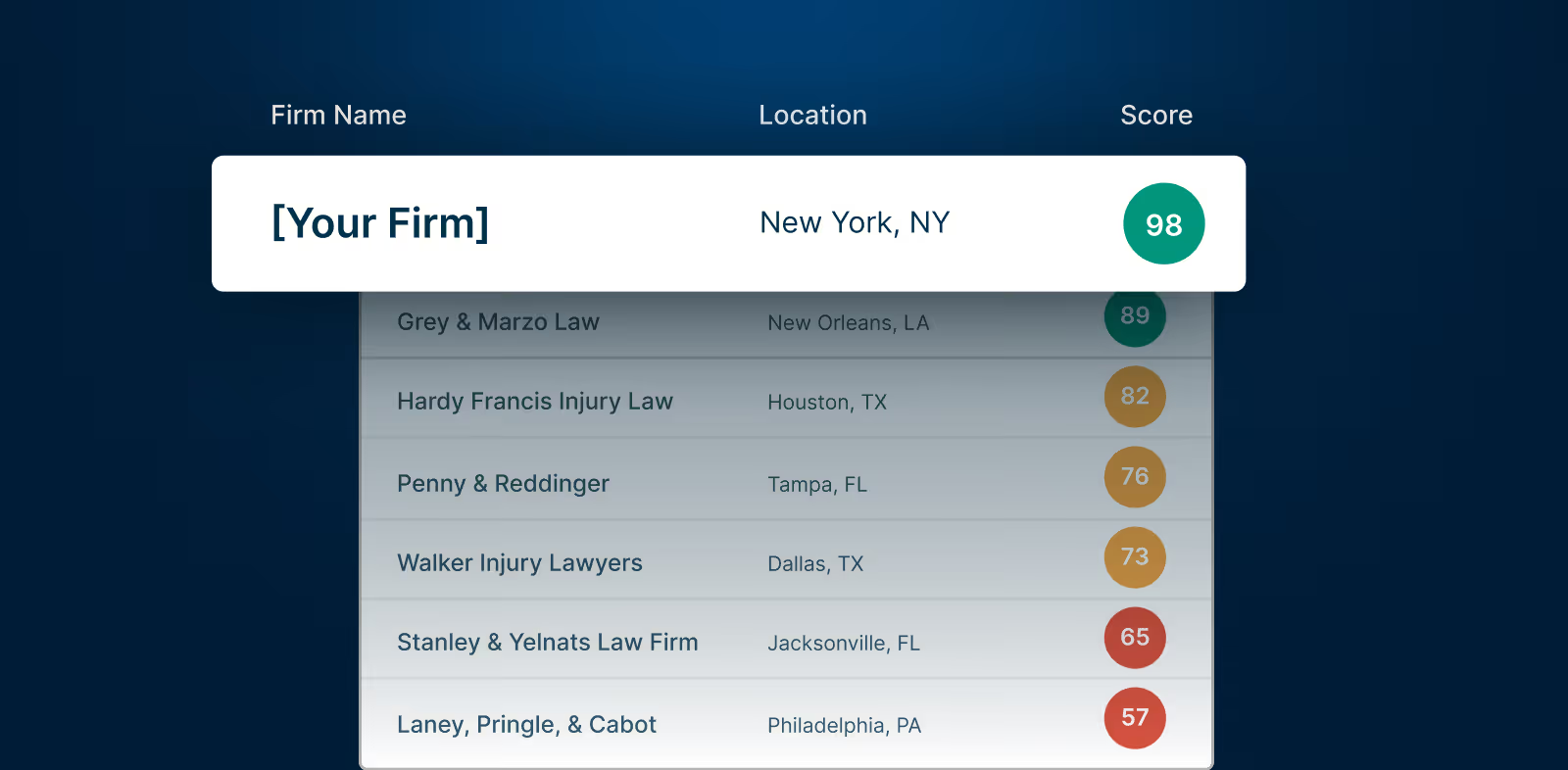
Litify organizes panel firm performance metrics into carrier-ready dashboards that reflect how firms are actually reviewed. With performance data segmented by client and case type, firms can identify gaps early and address them well ahead of audits and renewals.
Advanced KPIs separating top-tier panel firms
What separates top-performing firms is their ability to track claim litigation KPIs that matter before they show up on a scorecard.
With insurance analytics, they monitor:
- Resolution by claim type
- Average time to discovery
- Expert usage frequency and costs
- Early case assessment accuracy
- Motion success rates
- eBilling dispute rate
Litify captures these advanced defense firm performance metrics in a single platform of action, helping firms align their work with carrier expectations and anticipate what’s coming next.
Defense firm dashboards: Turning metrics into action
Having the right data is important, but what matters more is how teams use it.
Litify dashboards bring daily operations into full view, combining billing data, case milestones, and task activity into a live performance snapshot. Instead of waiting for end-of-month reporting or quarterly reviews, firm leaders can see exactly where each matter stands, including what’s falling behind and where time is being lost.
These insights let teams go from looking backward to adjusting in real time. They can course-correct as issues emerge and stay aligned with what carriers expect from their top panel firms.
Benchmarking performance across carrier panels
Carriers want to know how a firm compares to others on the panel and whether its results are trending in the right direction. That’s why they rely on panel performance metrics like:
- Average case cycle time by client
- Indemnity trends by jurisdiction
- Billing dispute rates by claim type
- Resolution methods by the panel firm
Litify’s platform stores all of this in one place so that firms can track year-over-year improvements with reliable data. They can also compare performance across multiple panels to build credibility and uncover new ways to improve outcomes.
How Litify enables KPI-driven insurance panel performance
Tracking KPIs is only the first step. Litify helps firms move the needle by surfacing friction points and providing the insights needed to improve outcomes across the board.
In fact, firms across the country are already embracing KPI-driven performance and seeing measurable results:
- McFarlane Law used Litify to cut billing delays in half and recover 10% in previously lost revenue. They replaced two disconnected systems, automated billing compliance, and now flag non-billable work before it ever gets submitted.
- Quintairos, Prieto, Wood & Boyer turned Litify into a centralized hub for 50 offices, helping them standardize workflows, identify missed billing opportunities, and significantly reduce write-downs.
- Staines Eppling & Kenney gained real-time insights to defend billing rates and win new business, while automations now flag carrier-rejected terms and eliminate delays in the appeals process.
Make your panel performance impossible to ignore
Top firms are raising the bar on insurance panel performance, tracking results in real time and using them to guide every decision.
Litify helps defense teams back every relationship with hard numbers. It turns transparency into a shared asset that builds trust and reinforces the firm’s role as a reliable partner.
Request a demo to see how Litify can help your firm meet and exceed your KPIs.
FAQs
What KPIs do insurance carriers use to evaluate defense firms?
Common KPIs include case cycle time, billing compliance, time on desk, resolution outcomes, and client satisfaction. Carriers often aggregate these in a scorecard to assess panel firm performance.
How often are insurance panel scorecards reviewed?
Some carriers review scorecards quarterly, others annually. But many now track performance continuously through dashboards and live metrics.
Which KPI has the biggest impact on panel retention?
Case cycle time and billing compliance tend to have the biggest impact. Long delays or frequent invoice reductions raise concerns about a firm’s value and alignment with carrier goals.
How can defense firms reduce litigation costs using analytics?
With the right analytics, defense firms can become more proactive. Keeping an eye on KPIs like expert frequency and time on desk reveals opportunities to streamline work and reduce costs without sacrificing results.
Do carriers require defense firms to provide dashboards?
Not always, but it’s becoming common. Many carriers now expect firms to provide performance data or integrate with their reporting tools. Having an insurance defense firm dashboard can help strengthen those relationships.
How does Litify support insurance defense performance tracking?
Litify helps defense firms stay on top of performance by unifying their data. Real-time dashboards let teams follow key metrics as cases move forward and quickly create reports to show results to carriers.