Unleashing the Power of Agentforce: 3 Agents Personal Injury Firms Can Action Right Now

Artificial intelligence is already transforming how legal work gets done. Many firms now use AI to draft emails, summarize documents, or analyze medical records faster than ever before.
But the next phase of legal AI goes further.
Rather than simply generating content, agentic AI can play an active role in the legal workflow by identifying what needs to happen next and taking action to help teams move work forward.
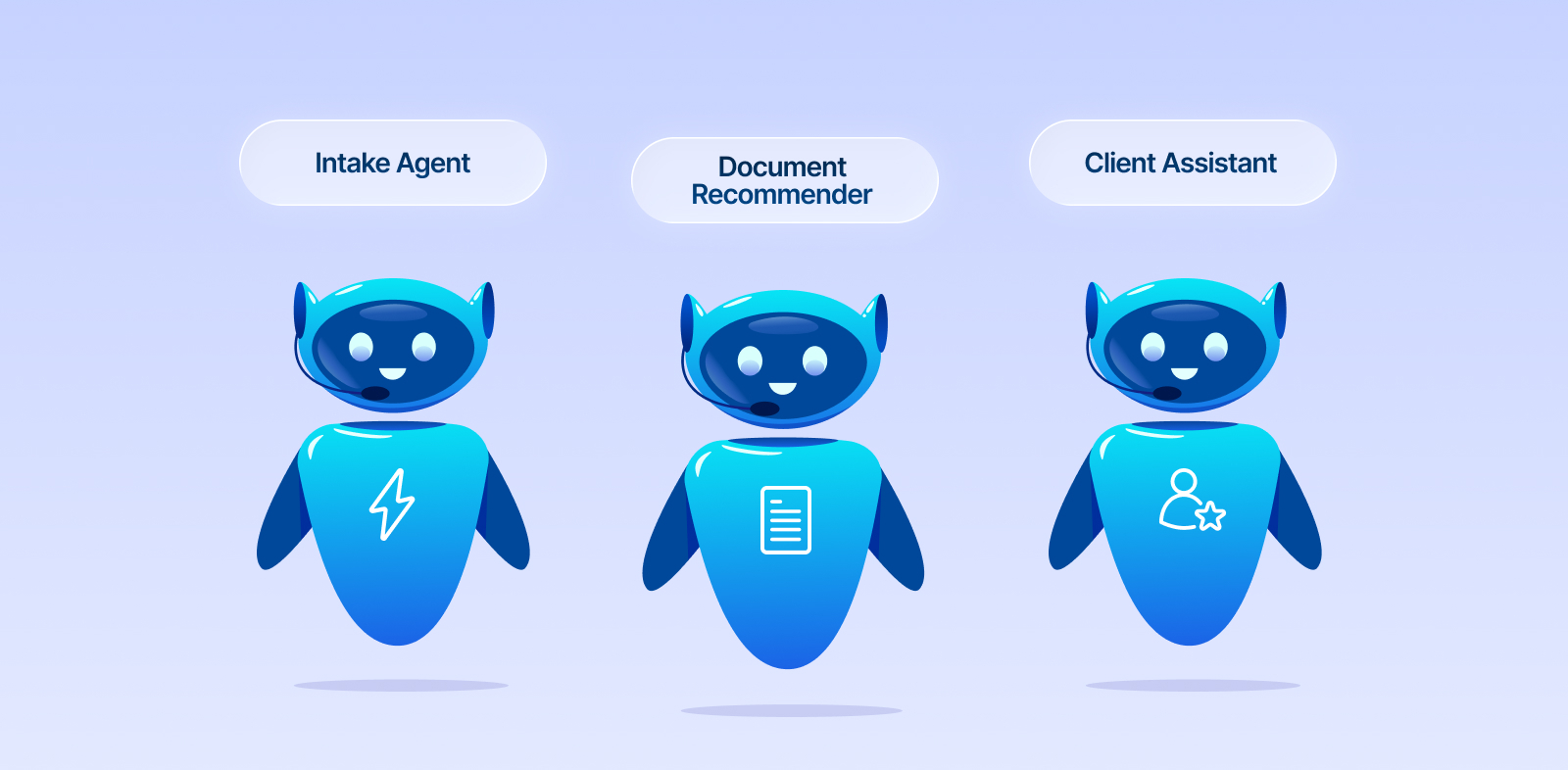
Below, check out three AI agents that personal injury firms can begin implementing today. Each one demonstrates how Litify’s AI-native platform of action can help law firms unleash their best by embedding intelligence directly into the legal workflow.
AI agent #1: The Intake Agent
Client intake is often the first impression a potential client has of a firm. When someone reaches out after an accident or legal issue, they expect a quick response, and delays can mean losing the case to another firm.
An intake agent helps eliminate those delays by automatically processing incoming inquiries and creating structured intake records within Litify.
This AI agent can:
- Analyze inbound emails or phone transcripts
- Extract key case details
- Create a new intake record automatically
- Generate a clear case summary for attorneys
- Populate intake questionnaire fields
- Assign follow-up tasks or reminders
Instead of relying on manual data entry, firms can move faster while ensuring every inquiry is captured and evaluated.
The Intake Agent in Action
Here, the agent processes an email from a potential client describing a car accident. After the email is sent into Litify, the agent automatically extracts the relevant information and creates a new intake record. It identifies the case type, generates a concise summary of the incident, and even assigns a case score to indicate potential value.
The agent also completes questionnaire fields based on the information in the email and schedules follow-up activity. In one scenario, it determines that immediate action is required and sends an alert to the appropriate attorney while scheduling a calendar event for a callback. In another example, the agent processes a phone call transcript, extracts details from the conversation, creates the intake record, and schedules a follow-up for the following week, demonstrating how AI can handle intake tasks automatically while still applying contextual reasoning.
AI agent #2: The Document Recommender
Document collection is one of the most time-consuming parts of legal case management. Missing medical records, police reports, or insurance documentation can slow down progress and create unnecessary administrative work.
The Document Recommender Agent helps streamline this process by learning from past cases.
When triggered, such as when a matter moves from draft to open, the agent analyzes previously resolved matters with similar characteristics. It identifies the documents that those cases required and compares them against the current matter.
From there, the agent can:
- Identify potentially missing documents
- Generate a task list to retrieve them
- Locate relevant contacts connected to the case
- Send document requests automatically
- Provide the matter team with updates on document status
- Kick off subsequent processes, such as approvals
This allows firms to automate large portions of the document retrieval process while maintaining full oversight.
The Document Recommender in Action
Here, the agent is triggered when the matter status changes. The agent analyzes similar resolved cases and identifies documents that should typically be present for a matter of this type. It compares those documents with the files already attached to the current case and produces a list of missing items.
The agent then breaks the work into smaller tasks. For documents where the appropriate contact is known, such as a hospital, insurance provider, or police department, the agent automatically generates and sends email requests using predefined templates. For documents that require a human in the loop, the agent drafts messages that staff can quickly review and send.
AI agent #3: The Client Assistant
Client communication is one of the most critical elements of a successful legal practice. But it can also be one of the most time-consuming and demanding parts of an attorney’s day.
Clients often reach out for updates, clarification on legal terms, or questions about what happens next in their case. Responding quickly helps build trust, but constant inquiries can interrupt attorneys and staff throughout the day.
The Client Assistant Agent helps balance responsiveness with efficiency. When a message comes in, whether through text or email, the agent can:
- Identify the client’s intent
- Retrieve relevant case information
- Pull answers from the firm’s knowledge base
- Generate an appropriate response
- Escalate complex questions to an attorney
This ensures clients receive fast responses while attorneys stay focused on higher-value work.
The Client Assistant in Action
Here, a client sends a text message asking for an update on their case. The agent receives the message, determines that it’s a request for a status update, and retrieves the relevant information from the matter record inside Litify. After reviewing the available data and confirming that the response aligns with existing guardrails, the agent sends a concise update to the client.
When the client asks what a contingency fee is, the agent pulls an explanation from the firm’s knowledge base and responds with a clear definition. If a question requires human involvement, such as inquiries about settlement details, the agent can instead route the message to an attorney, ensuring appropriate oversight.
Unleash your best with Litify’s AI-native platform of action
Each of these agents highlights a fundamental shift in how AI supports legal work. Instead of simply analyzing information or generating content, agentic AI participates directly in the legal workflow by monitoring activity, initiating tasks, and recommending the next best action.
That’s the philosophy behind Litify’s AI-native platform of action, which embeds intelligence throughout the case lifecycle so law firms can unleash their full potential. Rather than relying on disconnected AI point solutions that simply analyze data, Litify AI integrates intelligence directly into the legal workflow, helping firms elevate their workforce, deliver better business and client outcomes, and unlock scalable growth.
As agentic AI continues to evolve, firms that adopt these capabilities early will be better positioned to operate more efficiently, deliver stronger client experiences, and scale their practices for the future.
Looking for more AI insights? Download our latest State of AI in Legal Report for a look at current AI adoption trends and the future of legal AI.
And if you’re ready to see Litify AI in action, request a demo to explore how agentic AI can transform your firm’s workflows.